
Where Do Turkish Clubs Get So Much Money?
Football fans across the world woke up this summer to a strange new reality in recent summers as clubs that were once punchlines for financial mismanagement are now writing cheques big enough to embarrass Europe's traditional giants.
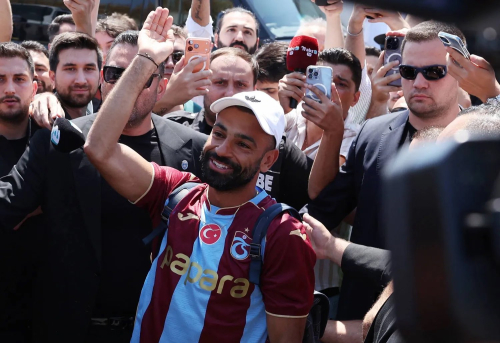
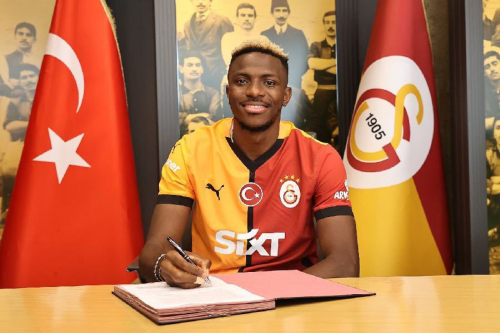
Mohamed Salah at Trabzonspor. Victor Osimhen at Galatasaray. Names that would ordinarily headline moves to Real Madrid or Bayern Munich are instead touching down in Istanbul and on the Black Sea coast.
It is a scene nobody quite predicted a decade ago, when Turkish football was synonymous with spiralling debt, currency collapse and clubs quietly offloading their best players just to keep the lights on. The transformation has been sudden enough to draw suspicion, and thorough enough to demand a real explanation rather than a shrug.
It is easy to look at such numbers and conclude that Turkish football has discovered an oil well. It has not. There is no Saudi-style sovereign wealth fund sitting behind the Süper Lig's leading clubs.
Instead, Turkey's football economy is built around government-brokered debt deals, land sales worth hundreds of millions of dollars, and sponsorship arrangements that would have seemed unthinkable during the depths of the lira crisis just a few years ago.
Turkish clubs are not necessarily richer than the Premier League or Europe's biggest leagues. In fact, Deloitte's latest Money League placed Galatasaray 21st in Europe with €273.6 million in revenue and Fenerbahçe 28th with €216 million.
The real story is how those clubs turn their available resources into competitive spending, amid their knack for spending big in recent windows, we take a look at where the money is really coming from for Turkish clubs.
Where Do Turkish Clubs Get So Much Money?
The Exit From Bankalar Birliği Debt Restructuring
In 2019, Turkey's banking association, the Bankalar Birliği, agreed a landmark restructuring of roughly $2.6 billion owed by Galatasaray, Fenerbahçe, Besiktas and Trabzonspor, stretching repayments over five years with two years free of principal payments.
It was less a bailout than breathing room, but the weakening lira quietly eased the real burden of that debt over time.
Trabzonspor became the first of the major clubs to completely leave the arrangement in September 2024, after paying off its loans and accumulated interest. The club's agreement had originally been extended to 2030, but its management chose to eliminate the banking debt early.
Galatasaray also exit the scheme, completing its restructuring process in July 2025, a milestone that freed the club to negotiate fresh credit lines without the shadow of the consortium agreement. That newfound flexibility helped clear the runway for the club's world-record Turkish transfer of Victor Osimhen from Napoli.
The significance of this is enormous. Yet, leaving the restructuring arrangement does not magically make a club wealthy; it removes a major financial constraint. Besiktas illustrates the problem particularly well. Chairman Serdal Adalı said the club's annual interest burden had approached €50 million, describing it as a major obstacle to sporting investment.
Real Estate And Asset Monetisation
With matchday and broadcast revenue nowhere near enough to fund modern transfer fees, Turkey's giants have turned to their most valuable non-footballing asset: land.
Galatasaray, Fenerbahçe and their rivals own or control valuable land and commercial assets, particularly around Istanbul. These assets can be developed, sold or placed into revenue-sharing arrangements, converting dormant wealth into immediate football funding.
Fenerbahçe's post-Bankalar Birliği strategy provides a particularly clear example. The club entered a cooperation with Emlak Konut involving properties in Ataşehir and Kayışdağı, using a revenue-sharing model based on land development.
Galatasaray have pursued a similar philosophy around projects connected to Florya and their wider property portfolio. The attraction is obvious: rather than waiting years for ordinary football revenues to accumulate, a club can unlock millions from an asset that has been sitting on its balance sheet.
For Trabzonspor, property and asset monetisation have also formed part of the broader attempt to reduce debt while creating room for sporting investment. This is particularly important for a club that does not possess the commercial scale of the Istanbul giants.
The Paradox of Local Inflation
Turkey's inflation crisis sounds like an obvious reason why clubs should be spending less. In practice, it creates a peculiar advantage in certain parts of the football economy.
Annual consumer inflation was still 32.11% in June 2026, according to Turkey's official statistics. Yet many of the biggest football transactions are effectively negotiated in euros. That distinction matters.
A Turkish club earning large portions of its domestic income in lira can be under severe pressure, but European prize money, transfer fees, sponsorship agreements and player contracts denominated in euros provide a different financial base. Meanwhile, domestic assets and commercial revenues can rise in nominal lira terms as prices increase.
This does not make inflation good for Turkish clubs. It is, in fact, enormously damaging to ordinary football operations. But clubs with access to hard-currency income and valuable assets can exploit the gap better than clubs dependent almost entirely on domestic revenue.
High-Stakes Politics and Fan Expectations
Then there is something that cannot be captured neatly in a balance sheet: Turkish football culture.
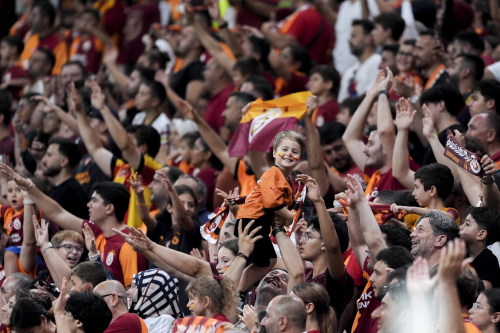
Galatasaray, Fenerbahce, Besiktas and Trabzonspor are not ordinary sporting organisations. They are institutions with enormous and emotionally invested support bases. Failure in the transfer market can create political pressure on club presidents, while a marquee signing can transform the mood around an entire institution.
That pressure encourages ambitious spending.
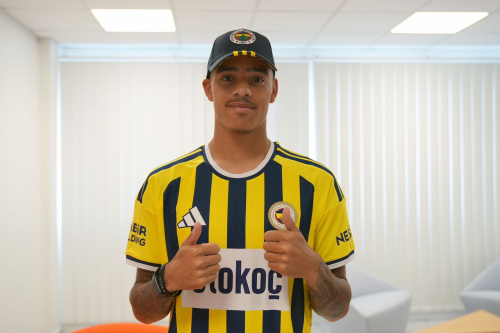
Fenerbahce's decision to bring José Mourinho to Turkey was part of that logic. The club subsequently secured a major commercial boost when Chobani agreed to a stadium naming-rights deal worth €10 million per season, alongside European shirt sponsorship worth at least €4 million.
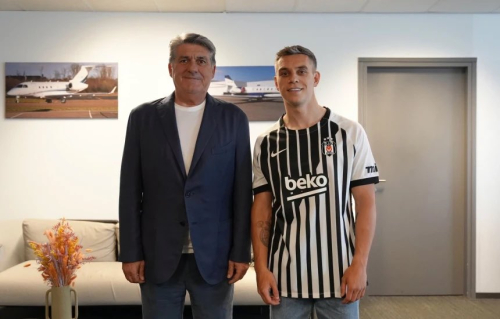
The same dynamic can be seen at Besiktas, where expensive names such as Ciro Immobile and Rafa Silva arrived on packages estimated at roughly €8.6 million each annually including bonuses.
The club has simultaneously been attempting to repair a financial structure that its chairman described as carrying enormous debt and interest obligations.
Alternative Financing and Creative Dealmaking
Perhaps the most fascinating part of Turkish football's spending boom is how deals are structured. Osimhen's move to Galatasaray was worth €75 million in transfer fees, but his remuneration also involves salary, loyalty payments and image rights.
Salah's Trabzonspor agreement is even more commercially ambitious. His reported €17 million annual salary comes alongside bonuses and a 20% share of merchandise revenue generated under his name.
That means Trabzonspor are not viewing Salah solely as a footballer. They are betting that his global popularity can generate shirt sales, sponsorships, commercial partnerships and international attention capable of offsetting part of his cost.
It is risky, but it is also increasingly how modern clubs construct expensive deals.
Can Turkish Clubs Sustain the Spending?
This is where fans have to worry. A transfer fee or salary does not necessarily have to be paid in one lump sum. Clubs can spread transfer payments across several years, attach bonuses to performance and structure agreements around commercial rights.
The danger comes when projected income is treated as guaranteed income. Champions League qualification, for example, can transform a club's finances. But missing out on European football can leave an expensive squad without the revenue that helped justify its construction.
What Happens If European Money Disappears?
UEFA has already placed limits on how aggressively clubs can spend.
Its financial sustainability regulations include a 70% squad-cost ratio, covering player and coach wages, transfer costs and agent fees. UEFA's monitoring process has already produced sanctions against clubs that breached its financial requirements.
That means Turkish clubs cannot simply spend indefinitely because they have wealthy supporters or valuable properties.
Fenerbahçe's recent financial monitoring experience is a warning that UEFA is watching the numbers closely.
Could Another Debt Crisis Follow?
This is perhaps the biggest concern. Turkish clubs have worked hard to escape their previous debt problems, but leaving Bankalar Birliği does not guarantee financial stability. A club can replace bank debt with enormous wage bills, transfer instalments and commercial commitments.
Property is finite. European qualification is uncertain. Players lose value, and sponsorship contracts expire.
For Trabzonspor, Salah could prove either a masterstroke or a financial headache. If his arrival generates commercial growth and helps deliver European football, the investment could make sense. But should otherwise be the case, the salary could become a heavy burden.
That is the wider Turkish gamble.
The Süper Lig has not discovered an unlimited source of money. Its biggest clubs have simply become better at finding, unlocking and restructuring money from multiple sources.
Galatasaray have combined European revenue, commercial growth and asset value to build an elite squad. Fenerbahçe are using sponsorship and property opportunities to strengthen their position. Beşiktaş are trying to balance ambition with financial repair. Trabzonspor have turned restructuring and commercial ambition into a platform for the Salah gamble.
The question is no longer whether Turkish clubs can spend, because they clearly can. The real question is whether they can still afford it when the trophies, European money and commercial excitement disappear.
