
FIFA Forward Enterprise: Lost to Football and Left Gianni Infantino Fighting for His Future
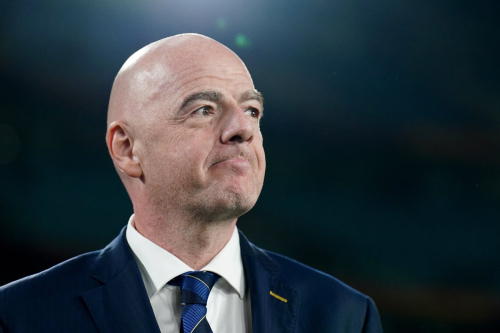
For a man who spent the last decade collecting unopposed votes like trophies, Gianni Infantino has never looked this exposed, but in the space of two weeks, a plan he clearly believed would sail through quietly instead blew up in his face, costing him the backing of football's most powerful confederation.
Football has survived corruption scandals, controversial World Cup host selections, failed Super League projects and endless governance disputes. Yet few ideas have united the football world against FIFA quite like the now-abandoned FIFA Forward Enterprise.
The proposal was presented as a bold financial revolution that would unlock billions of dollars for football development. Instead, it triggered one of the biggest political rebellions in FIFA's modern history, placing Gianni Infantino's leadership under greater scrutiny than at any point since first becoming president in 2016.
Whether history remembers it as an ambitious vision or an astonishing scandal depends on perspective. What is beyond debate is that the saga has fundamentally changed the conversation about who truly owns football.
This is the story of the FIFA Forward Enterprise, and why it might just be the beginning of the end for Gianni Infantino as president of the Federation.
What Exactly Was FIFA Forward Enterprise?
Announced on 28 July, barely a fortnight after the curtain fell on the maiden 48-team World Cup in North America, FIFA Forward Enterprise (FFE) was pitched as a new commercial subsidiary that would run the money-making side of FIFA's business.
The concept of FIFA Forward Enterprise appeared simple on paper. Rather than allowing the Federation to manage the commercial rights of its competitions directly, a new commercial company, FIFA Forward Enterprise, would control those valuable assets.
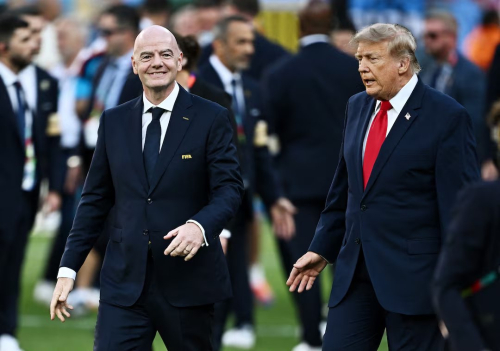
FIFA would remain the majority owner while selling a minority stake to private investors reportedly worth billions of dollars.
Infantino and his aides argued that football was sitting on untapped commercial value, and by attracting outside investment, FIFA could generate immediate capital instead of waiting years for tournament revenues.
Infantino consistently promoted the idea as a mechanism to increase funding for member associations, grassroots football, women's football and infrastructure projects around the world.
The idea, as presented, sounded attractive. After all, more money usually means more opportunities. Unfortunately for the now underfire president, football's stakeholders saw far more than an investment proposal.
The Case FIFA Tried to Sell
There was, to be fair, a version of this that could have worked. FIFA already sits on billions in reserves with zero debt, but an extra $4.2 billion earmarked for grassroots development in countries that genuinely need it is nothing.
Adopting the FFE means more cash for smaller federations, quicker infrastructure upgrades, better youth pathways; these are real, tangible benefits that could reshape football in places the sport's wealth rarely reaches.
Supporters also argued that football's commercial value continues to rise rapidly. Instead of relying solely on broadcasting and sponsorship cycles every four years, FIFA could diversify its income and create greater financial stability.
The trouble is that none of it survives first contact with the obvious question of why an organisation with no debt and record World Cup revenue needs to sell a permanent stake in its most valuable asset at all?
Why It Blew Up So Fast?
That question is essentially what killed FFE. Critics pointed out that FIFA generated roughly $15 billion in revenue between 2022 and 2026 alone. If more investment was genuinely needed, the money was already sitting in the bank.
Selling equity in the World Cup to private investors, forever, just to raise a fraction of that figure looked less like smart business and more like mortgaging the future for a quick headline number, one that, inconveniently for Infantino, also included reports of a $30 million annual salary attached to the new entity.
Then there was the secrecy. FIFA's own confederations, including CONCACAF, reportedly found out about the plan through media leaks rather than consultation, despite Infantino's insistence the project would only move forward with member support.
For an organisation still trying to shake off the ghosts of its last governance crisis, announcing a multi-billion-dollar sell-off of the World Cup without properly looping in the people who are supposed to vote on it was, frankly, an astonishing unforced error.
The timing of the revelation was also poor. Coming after a controversial World Cup tournament that left many countries and federations, especially UEFA, aggrieved by several scandals, Infantino had hardly won the favour of those who were expected to back his project.
UEFA Led the Resistance Charge
Every major dispute needs a leader, and in the case of the FIFA Forward Enterprise, UEFA deserves the credit as it was the face of the resistance.
The organisation, led by President Aleksandr Čeferin, voted to boycott FIFA outright if the plan wasn't withdrawn, skipped diplomatic niceties, and dragged CONCACAF and the AFC along with it in open opposition.
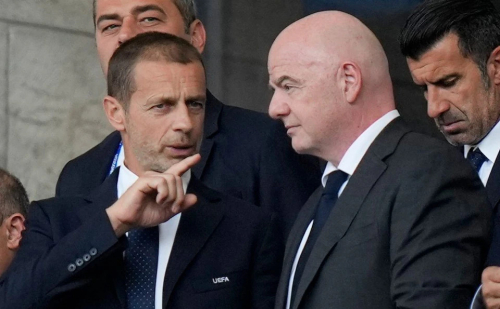
By the time FIFA folded, 143 of its 211 member associations were reportedly against the proposal, hardly the picture of unity Gianni Infantino likes to project.
Infantino ultimately scrapped the plan in the early hours of 1 August, claiming FIFA had listened carefully and concluded the project had become too divisive, a rare retreat from a man who has rarely needed to retreat from anything in ten years at the top.
Gianni Infantino's Biggest Political Mistake
Perhaps Gianni Infantino's greatest failure was not proposing FIFA Forward Enterprise; it was misreading football's political landscape by assuming that promises of increased funding would outweigh concerns over governance.
However, National associations, leagues, clubs, supporters, politicians and football administrators all expressed varying degrees of concern.
Ultimately, when an idea creates that broad a coalition of opponents, leadership must ask whether the proposal itself, or the process behind it, has fundamentally failed. Eventually, FIFA withdrew the plan.
That decision avoided an institutional crisis but did little to repair the damage already done to the image of Infantino and those who supported him, and now leaves his re-election at the mercy of those against him.
FFE Backlash That Refuses to Fade
Withdrawing the plan didn't end the story; it started a new one. UEFA didn't celebrate the U-turn so much as declare it had lost confidence in FIFA's current leadership altogether, demanding accountability for whoever cooked up the scheme in secret.
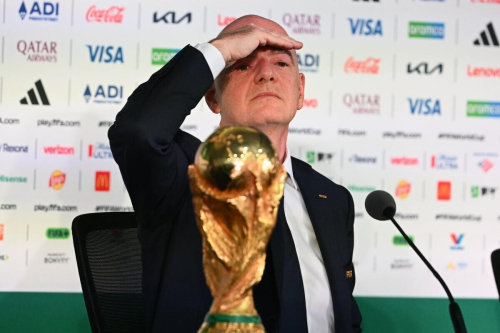
CONCACAF has also echoed similar sentiment behind closed doors, with reports suggesting the vast majority of its members no longer trust Infantino to lead.
Senior FIFA figures publicly distanced themselves from the proposal, while criticism over governance, transparency and consultation has intensified.
Countries Beginning to Withdraw Support
Perhaps the clearest indication of the changing mood is what has happened to Infantino's expected re-election campaign. Wales became the first football association to officially withdraw its support following the FIFA Forward Enterprise controversy, citing a loss of confidence in the president's leadership.
Reports also indicate that England is preparing to follow, while several UEFA members are considering withdrawing previously submitted endorsement letters as pressure mounts for a credible challenger to emerge.
Although Infantino continues to enjoy significant backing from parts of Africa, South America and sections of Asia, the united European front represents the most organised political challenge of his presidency. The election is no longer viewed as a formality but as an increasingly competitive contest.
What This Means For Infantino's Future
Under FIFA's statutes, just 20 percent of member associations can trigger an emergency congress and a vote of no confidence, and UEFA is reportedly exploring exactly that option, alongside the option of simply fielding a rival candidate before the November deadline for next March's presidential election in Rabat.
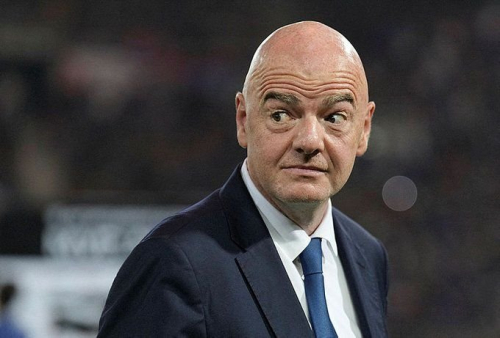
Whether a no-confidence vote would even remove him outright remains legally murky, but the mere fact it's being discussed says everything about how far his standing has fallen.
Not everyone has abandoned ship. CONMEBOL has already thrown its weight behind a fourth Infantino term, and his traditional African base has stayed largely quiet rather than hostile.
But the optics are brutal for a president who was toasting the most commercially successful World Cup in history less than two weeks ago in North America, now fighting to convince his own electorate he should keep his job.
Whatever happens between now and March, one thing already feels certain — Gianni Infantino picked the wrong hill to sell shares on, and football's governing bodies made sure he knew it.
