
The Thomas Partey Handshake: A tale of two characters featuring Rice and Spence
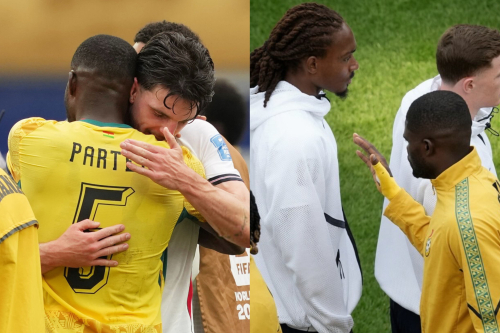
The 2026 FIFA World Cup group stage clash between England and Ghana at Foxborough will not be remembered for the boring scoreline but for the brief pre-match encounter that completely engulfed the narrative of the tournament.
The instant Tottenham Hotspur’s Djed Spence appeared to deliberately ignore Ghana captain Thomas Partey during the traditional pre-match handshake lineup, a massive societal fault line opened up.
The juxtaposition became even starker at full-time when Arsenal’s Declan Rice embraced the midfielder, sparking a fierce debate that has divided the English football community along unexpected racial and moral lines.
Why was Thomas Partey's handshake debatable?
The backdrop to this tension involves severe legal proceedings hanging over Thomas Partey, who is scheduled to stand trial next year at Southwark Crown Court.
The 33-year-old faces multiple serious charges, including seven counts of rape and one count of sexual assault, stemming from allegations made by four separate women regarding incidents between 2020 and 2022.
While Partey has strenuously denied all charges, stating through legal representation that he welcomes the trial to clear his name, the severity of the allegations has made his presence at the tournament a flashpoint.
Notably, he was denied entry by immigration officials for Ghana’s opening group fixture of the 2026 FIFA World Cup against Panama in Canada, but was granted a visa to feature in the United States leg of the group stage.
Did the FA approve the Thomas Partey handshake?
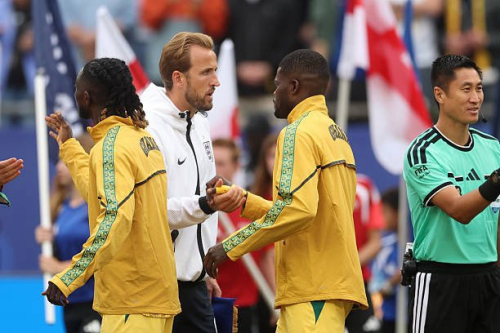
Behind the scenes in the England camp, there was substantial administrative hesitation regarding how the squad should handle the protocol.
Ultimately, the Football Association chose to issue no specific guidance or mandates to Thomas Tuchel’s squad before they walked out in Boston to face the Black Stars for the top of Group L battle.
Officials inside the FA deliberately stepped away from instructing the players to either refuse or participate in the greeting.
The governing body's logic was rooted in strict legal neutrality as they wanted to avoid any public perception that the England national team was pre-judging an active criminal case before a court verdict had been reached.
The official expectation, therefore, was simply that the players would follow standard FIFA fair-play protocols, leaving any variation entirely up to individual conscience.
Why would Djed Spence refuse?
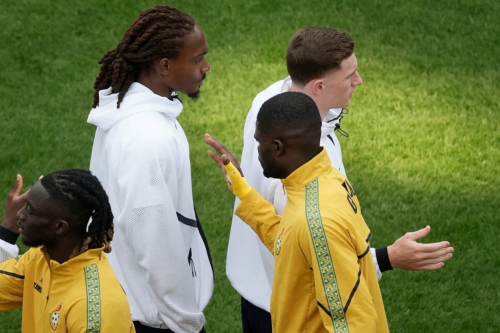
When the moment arrived, television cameras momentarily panned away, but raw social media footage captured Djed Spence keeping his right hand firmly planted inside his tracksuit pocket as Partey walked past the England line.
For Spence, this was an active, individual choice to break ranks with the rest of his teammates, who all proceeded with the standard greeting.
While the Tottenham Hotspur full-back has not issued an official manifesto explaining the snub, observers note that he has taken a highly personal stand on the gravity of sexual violence allegations.
By refusing the handshake, Spence made a quiet statement that the sport should not afford normal pleasantries to individuals facing such massive legal clouds, choosing to draw a personal moral boundary on the pitch.
Were Declan Rice's actions acceptable?
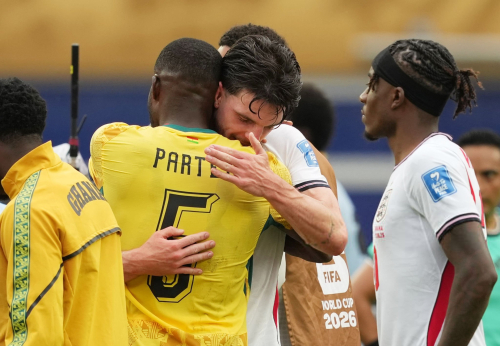
On the opposite side of the spectrum was Declan Rice. Not only did the midfielder shake hands before kickoff, but at the full-time whistle, he shared an emotional, supportive embrace with the Ghanaian captain.
From a traditional lens, Rice’s behavior represents the purest adherence to the principle of innocent until proven guilty. In addition, he is a man that share the pitch for two seasons with Thomas Partey at Arsenal, and that familiarity is still there.
By showing warmth and baseline professional respect to a peer on the pitch, Rice abided by the rule of law and standard sporting diplomacy, refusing to treat a fellow professional as a convicted felon while the judicial process is still pending.
It was a display of empathy grounded in the belief that the pitch is a place for football, not unilateral moral judgment, especially that of a former teammate.
Consequences of the actions of both players
The fallout from these contrasting actions has flipped conventional racial expectations on their head, exposing deep polarization among fans.
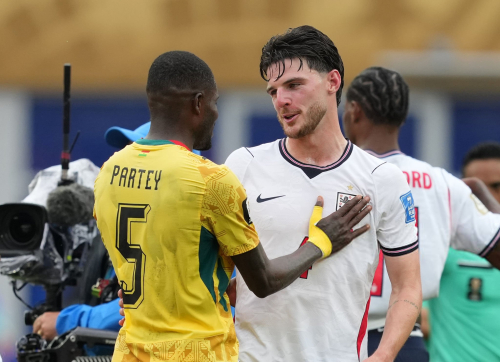
A segment of the White footballing community has heavily criticized Declan Rice, accusing the England vice captain of showing public solidarity with a man facing multiple rape charges, while hailing Spence as an authentic moral hero who stood up for victims of sexual assault.
Conversely, a vocal portion of Black football fans online has reacted with deep disappointment toward Spence, viewing his snub as a case of a Black man publicly humiliating another Black man on the world stage before a trial has occurred.
For these supporters, Rice, a white player, exhibited true allyship by extending grace and reserving judgment, while Spence’s actions were viewed as an act of internal betrayal.
The immense pressure following this racialized backlash ultimately forced Spence to restrict comments on his official Instagram account, as the internet continues to argue over which player truly upheld the correct moral standard.
There have also been calls by fans and some African outfits that Djed Spence be suspended for England's next FIFA World Cup game for unsportsmanlike behavior.
