
More Football Row as 13 Nations Slam UEFA President Over Uninteresting World Cup Comments
Football has always prided itself on its power to unite, but several storms are brewing at the World Cup that threaten to tear its delicate political fabric apart.
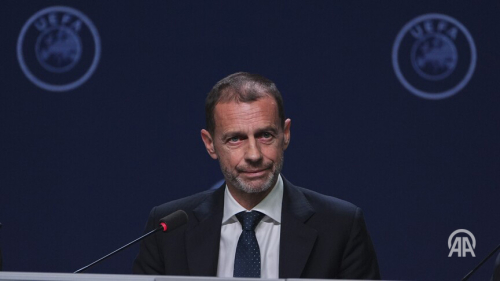
One of the many pandemonia took a step higher on Sunday, after a coalition of 13 football associations from Africa, Asia, and the Caribbean issued a fierce joint statement hitting back at UEFA President Aleksander Čeferin.
The extraordinary rebuke comes after the UEFA president spoke out against the newly expanded 48-team FIFA World Cup tournament, suggesting that the increase in teams would dilute the quality of the competition.
The row has laid bare a deep philosophical divide in global football, with the old elite of Europe protecting its territory against the rest of the world, who continue to demand an equal seat at the table.
The Aleksandr Čeferin Statement that Sparked it All
The controversy began when Čeferin gave an interview to the Slovenian newspaper Delo. Speaking about the expansion from 32 to 48 teams, the UEFA boss made it clear he was no fan of the new format.
Čeferin argued that the expansion was bad for the tournament's quality, stating:
“We have a lot of matches that are completely uninteresting.”
While he tried to soften the blow by adding that "even small countries can participate and feel the pulse of the World Cup, which is a big deal," the damage was already done.
To the nations who have fought through years of gruelling qualification rounds to reach the tournament, the comment felt less like an honest critique and more like a patronising pat on the head from the high table.
Every Match Matters Protests
The reaction from the rest of the world was swift and uncompromising. A collective of 13 nations, comprising Cape Verde, Curaçao, Uzbekistan, Congo, Haiti, Algeria, Tunisia, Morocco, Egypt, Ghana, Senegal, South Africa, and Côte d’Ivoire, released a joint statement expressing their profound disappointment.
The countries wasted no time in dismantling the idea that any game at a World Cup could be labelled as padding.
“We respectfully but firmly reject these comments,” the statement read. “For our countries, there is no such thing as an unimportant World Cup match.”
For debutants like Uzbekistan, Curaçao, and Cape Verde, reaching this stage is the culmination of lifetimes of work, and for countries like Haiti and Congo, returning after decades away is a deeply emotional event for their citizens.
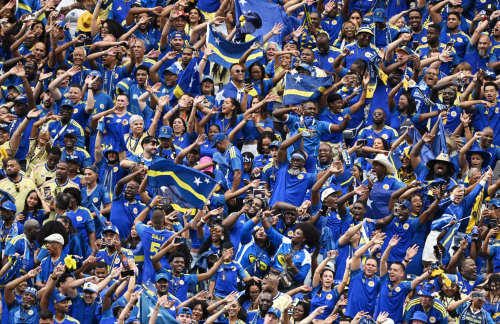
The nations rightly pointed out that dismissive comments from the UEFA president, Ceferin, ignore the immense sacrifices made by players, coaches, and fans outside the traditional powerhouse continents.
The coalition hit the nail on the head regarding what the FIFA World Cup truly stands for:
“Football does not belong to a select group of nations. Its strength comes from its universality. The FIFA World Cup is the world’s greatest football competition precisely because it brings together different cultures, different histories, and different football journeys.”
The statement ended with a clear, defiant message to the UEFA hierarchy: “Every team qualified on merit. Every match matters.”
Where it all Started
This row is about much more than a clumsy choice of words by Aleksandr Čeferin, but highlights the growing friction between Europe and the rest of the football world.
For decades, Europe and South America have dominated the World Cup, both in terms of winners and the allocation of tournament spots, with Europe even playing in 19 of the previous 21 final matches, including nine all-UEFA finals.
When the tournament expanded to 48 teams, Europe only received three extra places, moving from 13 to 16. Meanwhile, Africa’s spots almost doubled, and Asia and the Caribbean saw massive boosts.
For the traditional powerhouses, this expansion represents a threat to their hegemony and a crowding of an already packed football calendar. But for the rest of the world, it is a long-overdue correction.
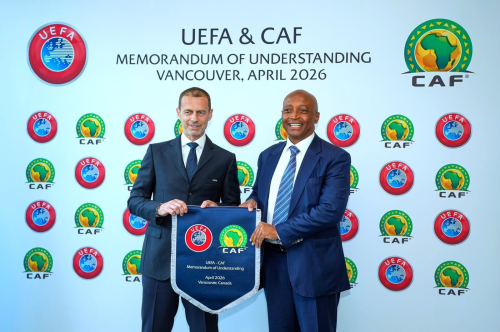
The global game has grown up. Academy systems in Africa and Asia are flourishing, and infrastructure is improving. To dismiss these emerging nations as uninteresting before a ball is even kicked feels remarkably out of touch.
The Consequences for the Beautiful Game
If this war of words escalates, the potential consequences for football could be severe, as it could potentially cause hostility between UEFA’s leadership and member associations from CAF (Africa), the AFC (Asia), and CONCACAF (North/Central America and Caribbean).
If the tournament becomes a political battleground where smaller nations are viewed as modern-day gatecrashers rather than equal competitors, the joy of the competition will be lost.
Football's greatest strength has always been equality, no discrimination whatsoever, and if UEFA forgets that the dream belongs to everyone, the beautiful game risks losing its very soul if FIFA can not find a way to restore order.

