
Premier League | Squad Value vs Cost - Best Run English Clubs As At 2025 Summer

Numbers don’t always tell the full story, but sometimes, they do like no other. A recent breakdown of squad cost versus squad value in the Premier League paints a fascinating picture of how some clubs are thriving through shrewd management while others are suffering the cost of a poor approach.
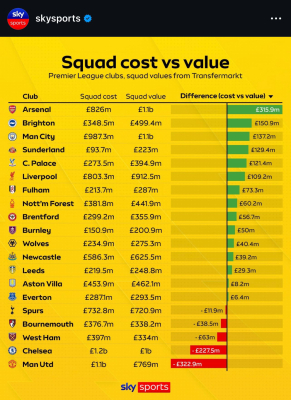
A table of squad cost against squad value according to data from Transfermarkt revealed the best-run Premier League clubs on these conditions, with Arsenal and Manchester City taking the favourable end, while Chelsea and Manchester United bond on the other.
Premier League | Squad Value Against Cost
1. Arsenal | The Model of Smart Squad Building

Arsenal’s story over the last five years has been one of calculated risks and long-term planning. Their squad, built for £826m, is now worth £1.1bn, making them the best-run club by this measure.
The biggest reason? They’ve been ahead of the curve in player development and recruitment. Bukayo Saka, an academy graduate who cost them nothing, is now valued at over £100m.
William Saliba, signed for less than £27m when he was 18, is now regarded as one of the best defenders in Europe. Gabriel Martinelli, bought for just £6m from Ituano in Brazil, has tripled his value many times over.
The club has also recently added rising stars from Hale End in Myles Lewis-Skelly, Ethan Nwaneri, and Max Dowman, all three youngsters who contribute significantly to the squad value, but none to the cost.
Unlike their rivals, Arsenal resisted the urge to buy finished product at the start of their rebuild five years ago. Instead, they targeted players entering their prime, and while the likes of Declan Rice, Martin Ødegaard, and Ben White represent huge signings, they will balance cost with long-term value.
That balance, also applicable to recent signings like Viktor Gyokeres, Eberechi Eze, Riccardo Calafiori, and Martin Zubimendi, has left them not only competitive but also financially sustainable.
Brighton | Masters of The Market
Graphic by Sky Sports. Data from Transfermarkt
If Arsenal represents smart planning, Brighton is the benchmark for efficiency. With a £348.5m spend leading to a £499.4m value, the Seagulls have achieved a £150.9m surplus largely by excelling where others falter—scouting and timing.
Moisés Caicedo, Alexis Mac Allister, and Marc Cucurella all passed through Brighton before commanding huge fees elsewhere. Today, Carlos Baleba, Kaoru Mitoma, and Yankuba Minteh headline a squad filled with undervalued gems that can either help the team compete or be sold for record profits.
Brighton’s model, heavily data-driven, emphasizes buying young and selling at the peak of a player’s value curve. It’s no coincidence that Tony Bloom, their owner, made his fortune in betting analytics; the club doesn’t gamble blindly, it plays the percentages.
3. Manchester City – Costly but Calculated

Manchester City have been heavily criticized for their excessive spending over the years, but their numbers.£987.3m spent vs £1.1b squad value tells a different story.
Unlike Brighton, they are not in the business of flipping assets. Instead, they invest heavily in proven quality, and Pep Guardiola’s ability to maximize these ensures that value is retained or even enhanced.
Erling Haaland, bought for £51m due to a release clause, now easily valued at over £150 million, really helped in their valuation. Homegrown talents Phil Foden, Oscar Bobb, Rico Lewis, and Nico O'Reilly combine for more than £200 million in value without transfer cost.
City might not boast the biggest surplus, even so, with the likes of Jack Grealish and Matheus Nunes seriously degrading in value, but what makes them well-run is how they sustain dominance while keeping their squad one of the most valuable in the world.
They represent the highest budget, but are complemented by good management. Buying the best, keeping them at their best, and rarely suffering depreciation. That is the strategy at City, and it works.
Crystal Palace and Sunderland – Outliers Done Right

Few would expect Crystal Palace and Sunderland to rank so highly. Palace, with a £121.4m surplus, is an underrated success story, considering Michael Olise and Eberechi Eze are out of the current squad.
The Eagles have quietly developed a blend of academy excellence and clever recruitment. Marc Guehi and Adam Wharton, for example, are all players who cost relatively little yet now boast values that dwarf their fees.
For Sunderland, a surplus of £129.4m highlights the rewards of trusting youth and proper scouting ahead of their first Premier League season since going down nine seasons ago.
They were able to play their newly promoted card very well and get good discounts on top signings like Granit Xhaka, Simon Adingra, Nordi Mukiele, Enzo Le Fee at bargain prices, while some free agents also added to their value but not cost.
Liverpool and Fulham – Pragmatism Pays Off
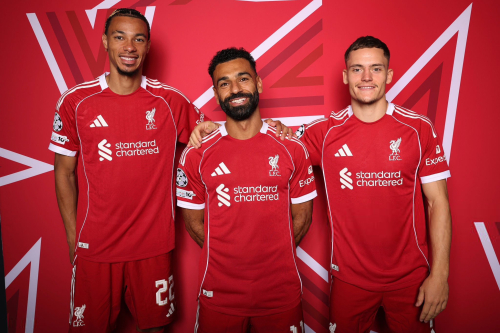
How high would Liverpool have ranked had they not lost Trent Alexander-Arnold earlier in the summer? But what would also be left on their £109.2 million surplus had Darwin Nunez not secured that move to Al Hilal earlier in the month.
Yet, the surplus is a reflection of their transition into a post-Klopp era, as new manager Arne Slot did not make any significant signings in his first window, then went on to win the Premier League title.
This summer, though, signing players like Florian Wirtz, Hugo Ekitike, Milos Kerke, and Jeremie Frimpong has added massively to their squad cost, but in the likes of Conor Bradley, Curtis Jones, Rio Ngumoha, Harvey Elliott, Joe Gomez, Trey Nyon, and Stefan Bajcetic, they have enough from the Academy to combat their expenditure.
Fulham, with £73.3m in surplus, has benefited from under-the-radar signings such as players who wanted a move away from their clubs, while the club is also open to selling.
Take their signings from Arsenal like Emile Smith Rowe and Bernd Leno, or Raul Jimenez from Wolves — this allows them to sign players for much less than their value, thereby adding to their surplus over squad cost.
The Worst-Run Clubs – When Cost Outweighs Value

On the opposite end of the list, clubs like Manchester United, Chelsea, and West Ham highlight how not to run a football business. The title 'The worst-run clubs' is most applicable to Manchester United.
The Mancunians, worst of the lot, with £1.1 billion spent but only a £769m squad value, show a deficit of £322.9 million, the worst in the league, or anywhere in the world.
Years of poor recruitment; think Harry Maguire for £80 million, Jadon Sancho for £73 million, and Antony for £85 million. These signings have left them paying over the odds for players who failed to appreciate.
Chelsea have spent £1.2b to assemble a squad now worth £1b, but a deficit of £227.5m may not be much of a concern for Todd Boehly and Clearlake Capital, because their young squad will only continue to appreciate.
Their strategy of mass buying young players on long contracts has been paying dividends, but the current squad is still behind in value, compared to how much they've spent.
While Cole Palmer is easily worth more than double the amount he was bought, Moises Caicedo and Enzo Fernandez are still behind theirs, while having Raheem Sterling on the books does not really help matters.
West Ham are haunted by a disastrous summer, where they lost the likes of Michail Antonio, Kurt Zouma, Aaron Cresswell, Danny Ings, Vladimir Coufal, and Lukasz Fabianski, all as free agents, while their most prized asset, Mohammed Kudus, also shipped away.
A couple of free signings helped make up for their losses, but other incomings have also been signed for more than their market value, which now lands them in hot water, and could get worse should Lucas Paqueta get his desired move away before the window closes.
Conclusion
Arsenal and Brighton prove that you don’t need to spend the most to generate the most value; you need to spend the smartest. The truth goes beyond balance sheets.
But the Gunners, Manchester City, and Liverpool benefit from the fact that they never let go of their best players, while it is not always the case for midtable teams, who are not only pressured into selling but also have to, to finance their activities.
In contrast, Manchester United and Chelsea reveal the cost of mismanagement, overpaying to sign players who have not matched their pricetag in value.
But it's not always about balance when clubs have done transfer business in the window. Bournemouth, for example, let go of their prized assets while only spending considerably little on incomings.
Chelsea, on the other hand, sold players on profit, but have also brought in new players for above modest fees, and these moves to equate their dealings, although expected outgoings and incomings could change their fortune significantly in the final days of the window.
Being a well-run club doesn’t just mean trophies but also ensuring that every pound spent builds sustainable value. Those who understand the balance are not just winning matches, they’re winning the future of football.
It gets even better if they know how to sell their players. Take Brighton, for example.

