
How Anelka and Henry deals in 1999 reshaped modern Arsenal
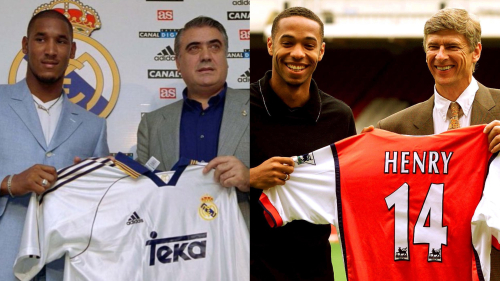
In football, some transfers define a season. Others redefine an entire club. Arsenal's business in the summer of 1999 belongs firmly in the second category.
What initially looked like the painful loss of one of Europe's brightest young talents became the catalyst for one of the most transformative periods in the club's history.
Nicolas Anelka's departure to Real Madrid was met with disappointment. At just 20, he had already established himself as one of the Premier League's best forwards and was expected to lead Arsenal's attack for years. Instead, his exit forced Arsène Wenger into one of the biggest decisions of his managerial career.
Rather than viewing the sale as a setback, Arsenal treated it as an opportunity. The club reinvested almost every penny into strengthening both the first team and its long-term infrastructure. That strategy would influence Arsenal for decades and become an example of sustainable squad building.
The money generated from Anelka's transfer did more than replace a striker. It financed the arrival of Thierry Henry, a player who would rewrite Arsenal's record books, and helped fund the construction of the London Colney Training Centre, a facility that continues to shape generations of Arsenal players.
Looking back more than two decades later, it is difficult to separate those two investments. One created Arsenal's greatest-ever player, while the other created the environment that has helped produce and develop countless talents. Together, they reshaped what modern Arsenal would become.
Nicolas Anelka: Arsene Wenger's £500,000 Masterpiece
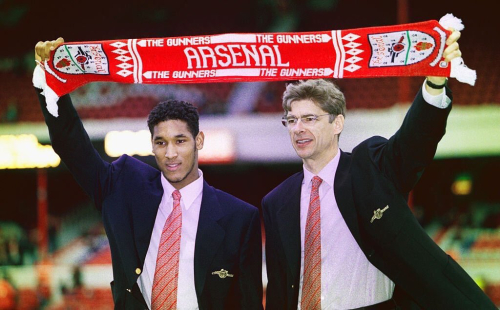
Nicolas Anelka's Arsenal journey began in February 1997 when their legendary manager Arsene Wenger signed the 17-year-old from Paris Saint-Germain for only £500,000.
The transfer sparked controversy in France because Arsenal argued that the recent Bosman ruling allowed them to sign him for free, but French authorities insisted compensation was required due to Anelka's age.
His breakthrough came sooner than expected. A long-term injury to the legendary Ian Wright opened the door, allowing the teenager to establish himself as a first-team regular in his first full season.
Blessed with pace, composure and clinical finishing, Anelka instantly became one of the driving forces behind Arsenal's famous Premier League and FA Cup double in the 1997-98 season.
He improved even further the following campaign, finishing as Arsenal's leading league scorer with 17 goals and earning himself the PFA Young Player of the Year award.
By the summer of 1999, Europe's biggest clubs were circling. Questions over his commitment had strained his relationship with sections of the Arsenal support, earning him the nickname 'Le Sulk', before Real Madrid agreed a deal worth around £22.5 million.
The Anelka windfall: Henry and London Colney
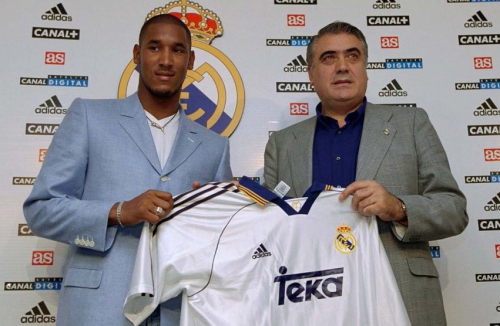
Selling one of the world's most promising young forwards could easily have weakened Arsenal. Instead, it became one of the smartest pieces of business in the club's history.
A significant portion of the transfer fee was immediately reinvested in Thierry Henry, who arrived from Juventus for around £11 million. Although Henry had struggled to establish himself in Italy, Wenger believed the Frenchman could thrive once returned to a central attacking role.
The remaining funds helped finance the construction of Arsenal's new London Colney Training Centre, a project estimated to cost around £10 million. Rather than spending every pound on short-term success, Arsenal invested equally in their present and their future.
Thierry Henry: The Replacement Who Became an Icon
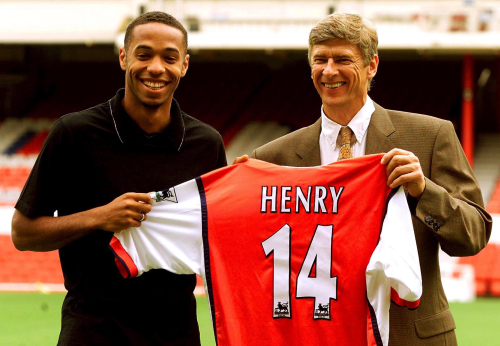
Few transfers in football history have delivered greater value than Thierry Henry's arrival at Arsenal from Italian Serie A club Juventus. Initially criticised after a slow start, the Frenchman soon developed into the Premier League's most complete forward.
He combined extraordinary pace with elite finishing, creativity and intelligence, becoming the focal point of Wenger's attack for almost a decade.
Henry scored 228 goals to become Arsenal's all-time leading scorer. He inspired the club to two Premier League titles, including the unbeaten Invincibles campaign of 2003-04, won four historic Golden Boots, collected two PFA Players' Player of the Year awards and twice finished runner-up for the Ballon d'Or.
He also played a central role in Arsenal reaching their first UEFA Champions League final in 2006 before leaving for Barcelona in 2007 in a deal worth around €24 million, ending one of the greatest individual careers English football has witnessed.
Ironically, the man brought in to replace Anelka went on to eclipse him. While Anelka struggled to replicate his Arsenal form after moving to Real Madrid and left after one season, Henry developed into arguably the greatest player in Arsenal's history.
London Colney Became Arsenal's Foundation
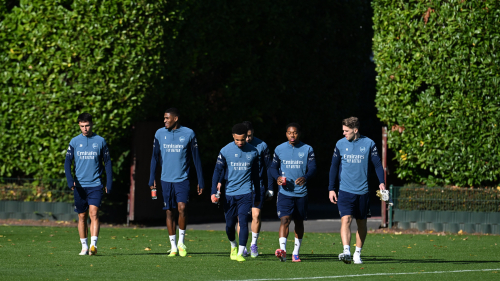
While Henry transformed Arsenal on the pitch with half of Anelka's windfall, the other half helped build the London Colney Training Center (now Sobha Realty Training Centre) and transformed the club behind the scenes.
Officially opened in 1999, the state-of-the-art training complex replaced Arsenal's outdated facilities and immediately became one of the finest football centres in England. It provided modern medical departments, recovery areas, training pitches, performance analysis facilities and youth development resources.
Over the years, London Colney has become home to generations of Arsenal players, from academy graduates to world-class stars. Players including Cesc Fàbregas, Jack Wilshere, Bukayo Saka and many others have developed within its environment.
The investment continues to pay dividends today, proving that infrastructure can influence a club's success just as much as expensive signings.
A Transfer Saga That Built Arsenal's Future
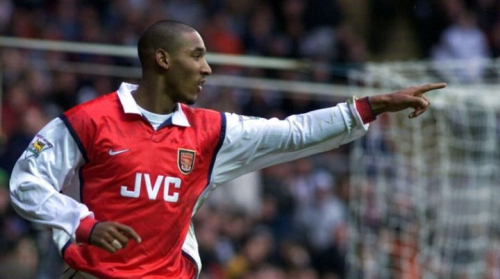
Many clubs have sold star players for huge fees, but few have managed to reinvest the money as effectively as Arsenal did in 1999, while also curing the heartbreak of fans for losing one of their best players.
Nearly three decades on, London Colney remains the heartbeat of Arsenal's football operations, while Thierry Henry's statue stands proudly outside the Emirates Stadium as the greatest player in the club and arguably in Premier League history.
Both are enduring reminders that the club turned one difficult goodbye into two of the greatest investments in its modern history. In hindsight, Nicolas Anelka's departure was not the end of an era, but the beginning of the brightest one at Arsenal.
