
Where Is the Scrutiny? Vinícius Júnior in 2024 But Not Lamine Yamal in 2025
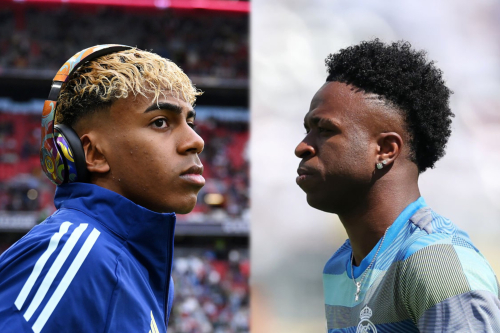
A few months before the Ballon d'Or ceremony comes to life again, and mainstream media have mentioned nothing as to why Lamine Yamal's questionable ethical behavior should influence decisions at polls when it was for the same discourse they downplayed Vinicius Junior's chances a year ago.
Whether or not the Brazilian could have won it will remain unknown, yet what the world should not forget is how the media, a section of fans, and even pundits painted him the bad guy and made him undeserving of the coveted prize.
Image now outweighs integrity in the world of football, and emerging incidents continue to expose the double standards embedded in the game, none clearer than the contrasting treatment of Vinícius Júnior and Lamine Yamal in the Ballon d’Or discourse.
Just over a year ago, Vinícius Júnior was coming off an extraordinary campaign with Real Madrid, one in which he helped deliver both the La Liga and Champions League titles. Not only was he decisive in each, but he was also named the best player in Europe’s biggest competition.
Any neutral observer would have expected him to claim football’s most prestigious individual honor. Yet when the Ballon d’Or conversations peaked, it wasn’t his brilliance being celebrated; it was his behavior being dissected.
Mainstream media framed him as volatile, a personality unfit for the top. His humanity was pushed aside in favor of a narrative that demanded he conform to an image of calmness, even in the face of persistent racial abuse. His emotional responses to relentless provocation became ammunition for critics, many of whom judged him more for his reactions than the abuse he endured.
And when the ballots closed, it wasn’t the numbers or the trophies that shaped the outcome; it was the noise. Rodri, by all standards excellent, emerged as the beneficiary of what many now consider a media-driven dismissal of Vinícius. He was crowned the world’s best footballer, but not without controversy.
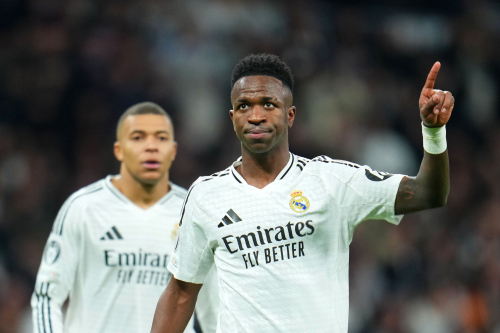
Fast forward to 2025. Lamine Yamal, while equally brilliant on the pitch, is gliding through Ballon d'Or conversations with barely a ripple of criticism, despite a string of off-field controversies far weightier than any of Vinícius’s in-game reactions.
The silence surrounding Yamal’s actions isn’t just suspicious, it’s damning. So again, where is the scrutiny?
Lamine Yamal | Where Is The Scrutiny?
At 18, the Barcelona prodigy has rightly drawn acclaim for his football. But beyond the pitch, a series of incidents has raised deep ethical questions, questions the media, fans, and pundits have largely ignored.
In recent months, reports have linked him to controversial relationships with significantly older women, some of which allegedly began before he turned 18. Among them was Claudia Bavel, a 29-year-old former adult film actress.
Social media screenshots suggested a flirtatious exchange, but his camp denied the claims, whereas the same commentators who dissected Vinícius’s facial expressions offered no word on these troubling associations.
Earlier in the summer, Yamal was photographed vacationing in Italy with Fati Vázquez, a 29-year-old influencer. Paparazzi captured them jet skiing and staying in the same villa, triggering rumors of a romantic relationship.
Both denied anything beyond friendship, yet Vázquez faced a torrent of online abuse, including death threats, and is even considering legal action for defamation and harassment. The world has not made many comments about Lamine Yamal because those who went for Vini's head remained unmoved.
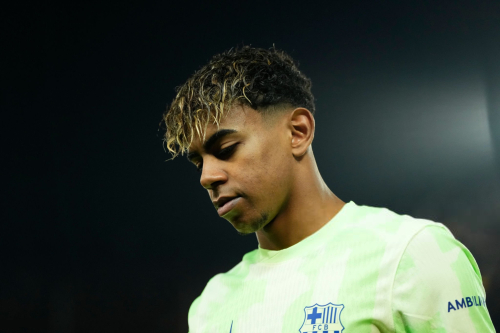
Then came his 18th birthday party, which ignited national backlash in Spain after it was reported that he hired entertainers with dwarfism for a mafia-themed celebration.
The Association for People with Achondroplasia (ADEE) condemned the act as dehumanizing and degrading, while the Ministry for Social Rights has even called on the Public Prosecutor’s Office and the Office for Combating Hate Crimes to investigate.
All these, including the possibility of a €1 million fine, did little to stir football’s collective conscience.
At the same party, Yamal reportedly paid up to €20,000 each to twelve women selected for their looks, an allegation first raised by news.com.au.
Spanish model Claudia Calvo later revealed, “I was asked to attend Lamine Yamal’s birthday party. They offered us between €10k – €20k to go, but I don’t know what they expected from us. They were asking for blonde women with very specific chest dimensions. We couldn’t take our phones.”
These are not minor scandals. They are well-documented, serious issues. Yet, they have not sparked any televised debate, no roundtable analysis questioning whether Yamal is setting a good example for young fans, no moral outcry from football’s gatekeepers.
For an 18-year-old with so much ahead of him, it’s unlikely these incidents represent the end of the story. But where is the scrutiny now?
Why was a young Black man from the streets of Brazil vilified for defending himself against abuse, while a young Spanish star is shielded despite being involved in multiple ethically questionable situations?
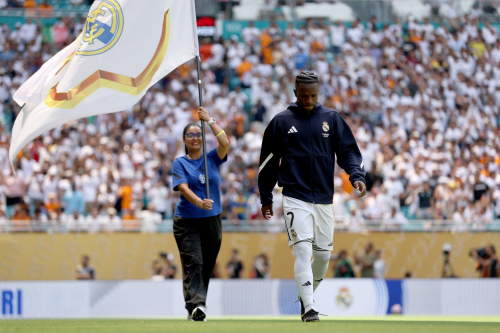
The answer is uncomfortable. Yes, Yamal himself is of African descent, so racial arguments aren’t cut-and-dried. But that doesn’t erase the overwhelming signs of media favoritism and selective outrage.
Vinícius’s justified anger was labeled arrogance. Yamal’s controversies are dismissed as youthful missteps. The very system that tore apart Vinícius’s passion now looks the other way when it comes to Yamal.
This isn’t a personal attack on a player, but a call for consistency, because accountability isn’t punishment. It’s a standard.
If public figures are to be measured, let it be by the same rulebook. Yamal’s brilliance on the field does not excuse what has gone unchallenged off it. If Vinícius was held to a standard, others must be too, perhaps even more so in the case of Yamal.
This is not about tearing anyone down, but about confronting the hypocrisy that runs through the veins of football stakeholders. It's about demanding fairness, because when greatness is selectively judged, it ceases to mean anything.
So again, we ask: where is the scrutiny?
Until football stakeholders stop choosing whose flaws to amplify and whose to conceal, the Ballon d'Or will remain less a reflection of excellence and more a mirror of bias.
