
Nigeria’s Ghost Representation at the 2026 FIFA World Cup Highlights Lost Heritage
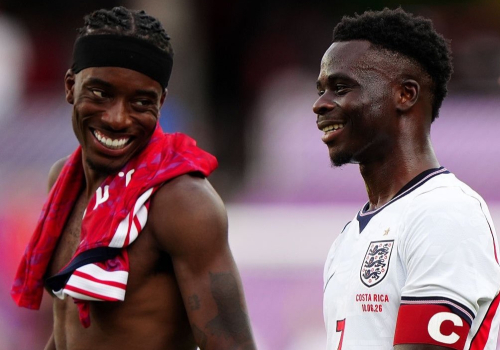
As the 2026 FIFA World Cup kicks off without the Super Eagles, Nigeria's footballing elite dominates the tournament under foreign flags, a scene that leaves a lot to be desired in a country that was once envied, as it loses its heritage.
There is an old saying in football that a man is free to imagine, if only to escape a harsh reality, and for Nigerian football and their aspirations to remain at the top of the food chain in Africa and maintain a steady reputation on the global stage, the reality is as cold as it gets.
The 2026 FIFA World Cup is underway, and the Super Eagles are nowhere to be found. Yet, if one looks closely at the squads paraded by the global elite across the Atlantic, Nigeria is massively represented without ever kicking a ball in the tournament.
A glance at the team sheet of certain counties at the 2026 FIFA World Cup is a startling, almost heartbreaking picture of what could have been for Nigeria, which didn't even qualify for the tournament.
Nigeria's World Cup Assembly in Diaspora
There are 15 elite and level-raising footballers, dressed in the colours of different teams, yet any of them could have put on the iconic green and white shirt for Nigeria, a country that needed it more.
However, the reality is that they are the sons of the diaspora, men of Nigerian descent who have flourished under foreign flags, and choose to repay the kindness of a system that brought them the glory in which they now bask.
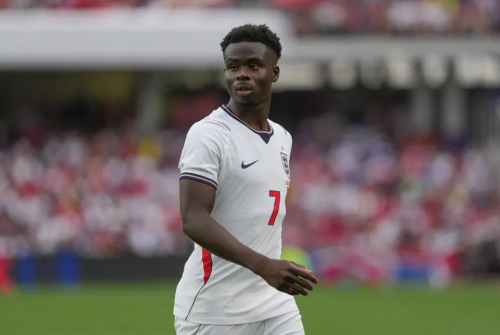
The 2026 FIFA World Cup features an extraordinary assembly of talent who are eligible to represent the Super Eagles. From England, we find Noni Madueke, the world-class Bukayo Saka, and the elegant, gliding creativity of Eberechi Eze.
Away from those who made the Three Lions squad to the global showpiece, there are talents like Ethan Nwaneri and Rio Ngumoha, who are left out and could have been useful for the Eagles even at their age. And there is also Fikayo Tomori.
Moving across the continent, Norway boasts the explosive youth of Antonio Nusa, while France commands the services of Michael Olise, a winger of frightening ingenuity, and one of the front-runners for this year's Ballon d'Or.
Switzerland’s spine relies heavily on the defensive steel of Manuel Akanji and the sharp movement of Noah Okafor, and even Austria features Carney Chukwuemeka alongside the veteran brilliance of David Alaba.
Germany’s creative engine room is driven by none other than Jamal Musiala, one of the most coveted young talents in world football, supported by the industrious Felix Nmecha, two players who could have raised the level of the Nigerian national team.
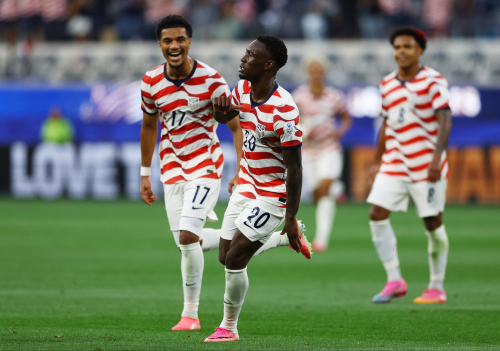
Even across the Atlantic, the North American contingent is heavy: Folarin Balogun spearheads the United States attack with a brace in the opener, while South Africa lines up with Ime Okon, and Canada boasts the attacking depth of Tani Oluwaseyi and Promise David.
It is a staggering collection of quality, a fantasy squad capable of challenging any footballing superpower on earth. But dreams do not win football matches, and pedigree on paper does not secure qualification.
Lessons from the 2026 FIFA World Cup
To understand why Nigeria is watching the 2026 FIFA World Cup from the sofa, one must look at the successful blueprints on their own continent.
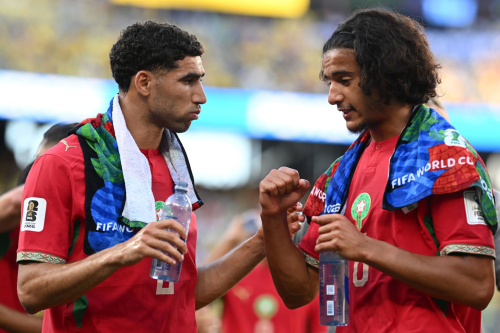
Consider the current strongest CAF teams, Morocco and Senegal, who have at least seven players in their starting XIs that have been to at least four major tournaments. That is experience. That is exposure.
Those are players who have not just seen it where it hurts and where it is good, but have felt it deeply in their bones. They have been tempered by the fire of international football, learning how to manage a game, how to suffer, and how to win.
When you parade quality players, the chance is high that you get it right; this remains the simple secret behind the long-standing dominance of the Europeans and South Americans at the FIFA World Cup.
Nigeria has also learnt the lessons, as the absence of Victor Osimhen for some of their games during the qualifiers ended up proving the difference between playing at the tournament and watching 10 other Africans play in it.
It is only the first time that the Super Eagles have missed out in back-to-back FIFA World Cup editions since their debut in 1994, and by the time the next one comes around in 2030, some of their current stars will be past their peak.
Rebuilding the Super Eagles Empire
The scenes at the 2026 FIFA World Cup are a poignant reminder that Nigeria remains a vast footballing empire, but until the administrators in Abuja can build a cohesive country, the players will not be inspired to represent the three-time African champions.
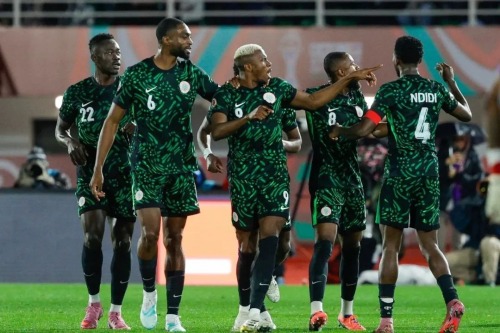
Yet, it wouldn't be fair not to recognize that under Eric Chelle, there have been a lot of promising signs, but there are still players who wouldn't be convinced due to the happenings in the country, even outside its football.
From the rise of Morocco, the biggest lesson is that a team can be built by relying on players from diaspora, but you have to make them want you, and if the leaks are not fixed, Nigeria will stay a nation rich in diaspora gold, but penniless on the world stage.
