
Morocco at 2026 World Cup: A Good Outing, But a Disappointing Way to Exit
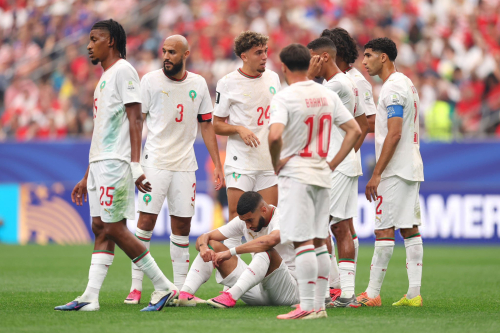
Morocco's remarkable World Cup journey came to an end on Thursday night in Boston, as France beat the Atlas Lions 2-0 to reach a historic third straight semi-final.
Kylian Mbappé and Ousmane Dembélé were the men who did the damage, but the manner of the defeat, more than the scoreline itself, will leave Mohamed Ouahbi's side with regrets.
Still, taken as a whole, this was another campaign that confirmed Morocco's place among the genuine heavyweights of world football, and the Atlas Lions can head home to Rabat with the heads above their shoulders.
A Group Stage to Remember
Morocco arrived in North America with the weight of history on their shoulders, having reached the semi-finals in Qatar less than four years ago, and they did not disappoint.
Drawn alongside five-time champions Brazil, they opened with a hard-fought 1-1 draw against the Seleção, a result that immediately signalled they had no intention of playing bit-part in their own group.
They followed that up with a 1-0 win over Scotland before rounding off the group with a 4-2 win against Haiti, a scoreline that showed both their attacking sharpness and a defence still finding its feet.
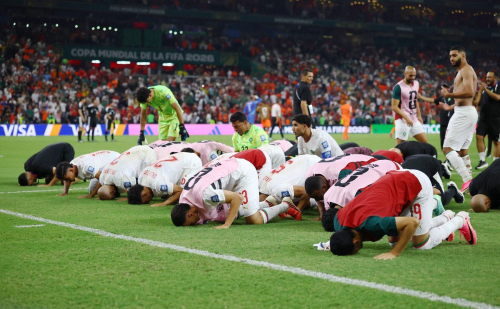
When the dust settled, Morocco had finished level on points with Brazil, seven apiece, a genuine marker of intent from a side many had expected to simply make up the numbers in a group containing one of the tournament favourites.
Overcoming the Dutch, Dismantling Canada
The knockout stages only strengthened the case that Morocco are now a fixture among football's elite, rather than a plucky outsider most African teams are viewed as, especially in the elimination rounds.
Against the Netherlands in the round of 32, they were the better side for long spells, until Cody Gakpo's second-half goal threatening to end their run before Achraf Hakimi's corner found Issa Diop for a stoppage-time leveller.
Extra time solved nothing, and it took a nerve-shredding penalty shootout, settled by Ismael Saibari, to send them through after the heroics of goalkeeper Yassin Bounou, who has only been beaten twice in nine World Cup penalties faced.
If that night was about resilience, the last-16 tie against co-hosts Canada was about ruthlessness. A quiet first half gave way to a clinical second, as Azzedine Ounahi struck twice either side of a stoppage-time goal from substitute Soufiane Rahimi, set up by Brahim Díaz's African record fourth assist of the tournament.
Morocco won 3-0 with just five shots on goal, the fewest by a winning side in a World Cup knockout match since records began in 1966 — proof, if any were needed, of their efficiency when it matters most.
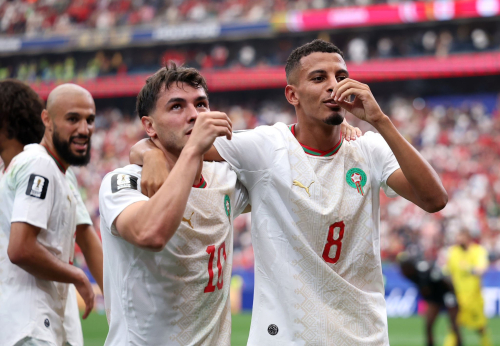
That victory made Morocco the only African nation left standing in the competition after Egypt were controversially knocked out by Argentina, and confirmed the Atlas Lions, once again, as the continent's benchmark.
No African side had reached back-to-back World Cup quarter-finals before Morocco managed it, a statement of consistency that sets them apart from every other team on the continent.
Too Passive Against France
For all that good work, Thursday's exit was where the campaign unravelled. Morocco actually matched France for spells of possession, and their midfield, marshalled by Neil El Aynaoui and Ayyoub Bouaddi, strung passes together impressively at times
In the end, possession without purpose counts for little, and that was Morocco's problem all night as they were sent home for the second World Cup edition running by the same team.
Despite pockets of promising build-up play, particularly after the break, Morocco failed to seriously trouble Mike Maignan in the French goal until deep into the second half.
Their first shot on target did not arrive until the 83rd minute, and in the form of a 25 yard strike from Azzedine Ounahi, an alarming statistic given the openings that had come and gone earlier in the contest.
France's own numbers told the story of the gulf in intent: an expected goals reading of 3.04 to Morocco's meagre 0.14, but they were kept at bay in the first-half by an inspired Bounou, who made several brilliant stops, including one to deny Kylian Mbappé from the spot.
Too often, Morocco worked the ball into promising areas only to go sideways or backwards rather than commit numbers forward. It was a conservative, almost timid approach in the final third from a side that had shown far more adventure against Canada.
Kylian Mbappé's saved penalty, Desire Doue's close range effort, and a Lucas Digne effort off the crossbar were reminders that France, too, were guilty of missed chances, but a team with genuine ambitions of reaching a semi-final cannot afford to sit so deep and so passively for so long.
The Rahimi Selection Question
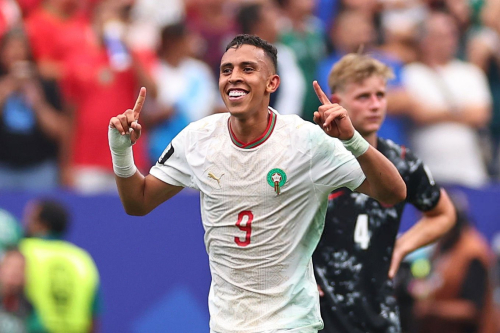
Much of the post-match inquest also focused on Mohamed Ouahbi's team selection. Soufiane Rahimi, who had scored and starred off the bench against Canada, was left out of the starting eleven entirely.
Instead, the Morocco boss set his team up with Bilal El Khannouss leading a more withdrawn, fluid front line alongside Brahim Díaz and Chemsdine Talbi.
Without the injured Bilal El Khannouss's more natural understudy Ismael Saibari, who missed out through a hamstring issue, Morocco lacked a focal point up top for large periods, making it easier for France's back line to sit comfortably and deal with crosses and long balls.
Rahimi was eventually introduced just past the hour mark alongside the experienced Sofyan Amrabat, but by then France already led through Mbappé's smart finish, with Dembélé's second goal following shortly after to end any hope of a comeback.
Given Rahimi's proven quality in front of goal this tournament, question marks will fairly be raised over why Ouahbi did not trust him from the first whistle against a France side there for the taking in the opening exchanges.
A Campaign to Be Proud Of
None of this should overshadow what has been, on the whole, a superb World Cup for Morocco. They have beaten a European giant in the Netherlands, thrashed co-hosts Canada, matched Brazil point for point in the group stage, and become the first African nation to reach consecutive World Cup quarter-finals.
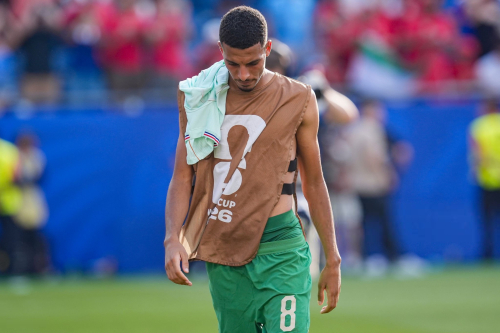
No other African team can boast anything close to that level of sustained success on the biggest stage, and the fact that this exit is a disappointment shows how far they have gone.
The Atlas Lions leave the tournament as, by some distance, the best-performing African nation in World Cup history, and their achievements deserve to be measured against that standard rather than against the disappointment of Thursday's exit alone.
The manner of the defeat to France will sting, and Ouahbi's tactical caution will be scrutinised in the days ahead. But step back, and Morocco's story at this World Cup is one of continued progress, ambition, and genuine world-class quality — a template every other African footballing nation would do well to study.
