
History of FIFA World Cup : The Beginning, Facts, Influence and All that makes the GOATed Sports Event
The history of the FIFA World Cup, which began in 1930 in Uruguay, has evolved from a 13-team tournament to a global event, drawing participation from over 200 national teams through qualification rounds.
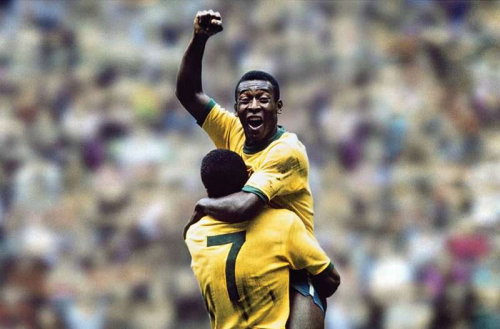
The early tournaments were limited, with only 13 teams in the inaugural World Cup due to travel and political challenges, yet they laid the groundwork for an enduring tradition.
The History of the FIFA World Cup
Over time, key developments like qualification rounds, group stages, and technological advancements, such as VAR, have reshaped the tournament to ensure fairness and a more competitive structure.
From being the most expensive football prize in history to the most engaged sporting event on the planet, the history and significance of the World Cup are further explained by an informative article.
Categories of FIFA World Cup Tournaments
The prestigious global football tournament comes in multiple categories, each offering soccer enthusiasts breathtaking spectacles in different age categories and genders. Alongside the FIFA Men’s World Cup, which is the main of this article, here’s an overview of the categories:
1. Men’s FIFA World Cup
Established in 1930, this is the flagship event featuring 32 teams (expanding to 48 in 2026) competing for global supremacy. It is held every four years, with an automatically qualifying ticket given to the host nation(s), just as in every other tournament of the Federation.
2. Women’s FIFA World Cup
Inaugurated in 1991, this, being a FIFA tournament, is the pinnacle of women's football. The latest edition, played in 2023 saw the introduction of expanded formats, with 24 teams, an upgrade on the 16 in each of the two previous editions.
3. Youth Tournaments
FIFA hosts age-specific events like the U-17 and U-20 World Cups for both men and women, giving a platform for the future generations to stars making their mark very early.
4. FIFA Club World Cup
It featured club champions from each of the continents, but has since been expanded into a 32-team competition. In 2025, it will take off and be played once every four years.
5. FIFA eWorld Cup and Beach Soccer
These categories celebrate the digital gaming culture and the dynamic beach soccer format, a move to showcase FIFAʼs diversification.
Qualification for the FIFA World Cup
Qualification for the FIFA World Cup varies by continent and is overseen by FIFA's regional confederations. Below is an insight into how the process works for the expanded 48-team format in 2026.
Europe (UEFA)
Europe has the highest allocation with 16 direct spots. Teams are divided into qualifying groups, with winners advancing and the runner-ups competing in playoffs.
Africa (CAF)
Africa receives nine direct slots and one playoff spot. National teams are divided into groups, with winners advancing directly, followed by playoffs to determine additional qualifiers for the runner-ups.
Asia (AFC)
Asia has eight direct qualification spots and one playoff berth. The multi-stage process begins with lower-ranked teams competing in preliminary rounds, advancing to group stages, and subsequent eliminations.
North America (CONCACAF)
The U.S., Mexico, and Canada qualify automatically as hosts for the 22026 edition. Three additional slots and two playoff places are up for grabs in a group-based qualification system.
South America (CONMEBOL)
South America features a 10-team round-robin league, where the top six qualify directly, and the seventh nation enters an intercontinental playoff, where they compete with a country from another continent for a place in the finals.
Oceania (OFC)
Oceania gains its first guaranteed spot, alongside one playoff berth. National teams compete in a regional tournament to decide the qualifiers.
Intercontinental Playoffs
The final two slots are decided in a playoff featuring teams from the AFC, CAF, CONCACAF, CONMEBOL, and OFC.
Official FIFA World Cup Ball
The history of the FIFA World Cup ball began in 1930 with the T-Model and the locally crafted Allen, used interchangeably during the inaugural tournament in Uruguay.
Leather and hand-stitched designs dominated early decades, as seen with the Federale 102 in 1934 and the Allen in 1938, but by 1970, the introduction of the Adidas Telstar revolutionized match balls, becoming the first to feature black and white panels for better TV visibility. This classic design became iconic in football culture.
Adidas has exclusively supplied FIFA World Cup balls since 1970, introducing synthetic materials with the Azteca in 1986, which improved water resistance and performance.
The Teamgeist (2006) marked a shift to thermally bonded panels, enhancing aerodynamic consistency. However, the Jabulani (2010) faced criticism for its unpredictable flight, despite its futuristic design.
In recent years, match balls like the Brazuca (2014) and Telstar 18 (2018) have integrated advanced textures and structures for optimal control. The 2022 Al Rihla incorporated sustainability, being crafted from eco-friendly materials.
Impact on National Pride and Global Unity
The World Cup is more than a soccer tournament. It’s a global cultural phenomenon that inspires intense national pride. Every four years, fans rally around their national teams, representing their identity and celebrating unity across borders.
This sense of national pride was particularly apparent in events like the 1950 “Maracanazo” where Uruguay defeated Brazil, creating a shared history that remains a reference point for fans around the world.
In addition to fostering unity, the World Cup often serves as a bridge for diplomacy. For example, FIFA has historically promoted the tournament as an opportunity to foster peace and goodwill among competing nations.
The History of FIFA World Cup
Economic and Cultural Legacy for Host Countries
Hosting the World Cup has significant economic implications. From massive investments in infrastructure to tourism revenue, host countries reap both immediate and long-term benefits.
The construction of stadiums, transportation networks, and accommodations supports local economies and generates jobs, leaving an infrastructure legacy long after the tournament ends.
Host countries also get a unique chance to showcase their culture on a global stage, as seen with Brazil in 2014 and Qatar in 2022, bringing international exposure and encouraging tourism growth for years to come.
The History of FIFA World Cup: Host Nations
The FIFA World Cup has been hosted by diverse countries, each adding unique cultural influences to this global sporting event.
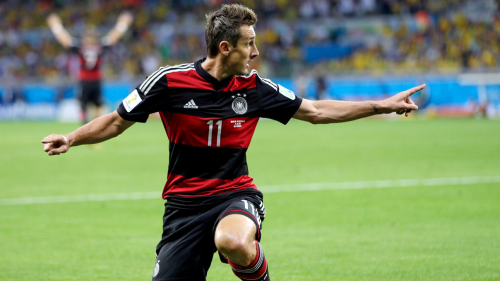
Since its inception in 1930, the tournament has been held on almost every continent, showcasing the passion for soccer worldwide.
FIFA World Cup Host Nations
The first host, Uruguay, marked the event’s beginning by winning in Montevideo. In the post-war years, nations like Brazil (1950) and Switzerland (1954) provided new platforms, helping the tournament gradually shift towards a true global spectacle.
South Africa in 2010 became the first and only CAF nation to host the global showpiece before Qatar hosted the first-ever winter edition, played in 2022, and thus became the first-ever Arab nation to host the tournament.
Record-breaking attendance and views at the FIFA World Cup
FIFA World Cup games have consistently set global records for attendance and viewership. For instance, Qatar 2022 saw an unprecedented five billion people engage with the tournament across television and digital platforms.
The in-person attendance was also remarkable, with more than 3.4 million fans attending the matches, averaging 96.3% stadium capacity, despite the harsh climatic conditions in Qatar.
Most watched Sports event ever
This level of attendance is a platform on which the history and significance of the World Cup were built upon, with the 1950 final in Brazil still holding the record for single-game attendance at over 173,000 spectators.
These milestones underscore the World Cup’s power to attract massive global interest and bring fans from diverse backgrounds together, celebrating football’s universal appeal and emotional intensity.
The History of FIFA World Cup
Hosts of each FIFA World Cup edition
- 1930 – Uruguay
- 1934 – Italy
- 1938 – France
- 1950 – Brazil
- 1954 – Switzerland
- 1958 – Sweden
- 1962 – Chile
- 1966 – England
- 1970 – Mexico
- 1974 – West Germany
- 1978 – Argentina
- 1982 – Spain
- 1986 – Mexico
- 1990 – Italy
- 1994 – United States
- 1998 – France
- 2002 – South Korea & Japan (co-hosted)
- 2006 – Germany
- 2010 – South Africa
- 2014 – Brazil
- 2018 – Russia
- 2022 – Qatar
The History FIFA World Cup – Future hosts:
- 2026 – United States, Canada, Mexico (co-hosted)
- 2030 – Spain, Portugal, Morocco (with anniversary matches in Uruguay, Argentina, Paraguay)
- 2034 – Qatar
Who Won the FIFA World Cup in Past Years
Here’s a list of FIFA World Cup winners by year since the first tournament in 1930:
- 1930 – Uruguay
- 1934 – Italy
- 1938 – Italy
- 1950 – Uruguay
- 1954 – West Germany
- 1958 – Brazil
- 1962 – Brazil
- 1966 – England
- 1970 – Brazil
- 1974 – West Germany
- 1978 – Argentina
- 1982 – Italy
- 1986 – Argentina
- 1990 – West Germany
- 1994 – Brazil
- 1998 – France
- 2002 – Brazil
- 2006 – Italy
- 2010 – Spain
- 2014 – Germany
- 2018 – France
- 2022 – Argentina
Most FIFA World Cup titles by Nations
South America heavyweight Brazil has a reputation as the best footballing nation in the world. This was due to their dominance of the FIFA World Cup in the last century.
Most FIFA World Cup titles by Nations
They have been crowned winners more times than any other nation, with five titles, more than the European duo of Germany and Italy.
- Brazil – 5 titles (1958, 1962, 1970, 1994, 2002)
- Germany – 4 titles (1954, 1974, 1990 as West Germany, and 2014 as unified Germany)
- Italy – 4 titles (1934, 1938, 1982, 2006)
- Argentina – 3 titles (1978, 1986, 2022)
- Uruguay – 2 titles (1930, 1950)
- France – 2 titles (1998, 2018)
- England – 1 title (1966)
- Spain – 1 title (2010)
Most FIFA World Cup titles by Players
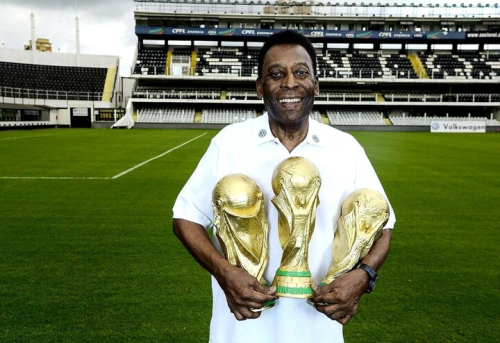
Pelé remains the only player to have won three World Cups, playing a crucial role in Brazil’s three triumphs between 1958 and 1970.
For a player that never played for any club in Europe, the late hero is regarded as one of the greatest players ever, and this recognition was earned playing in the global showpiece.
- Pelé (Brazil) – 3 titles (1958, 1962, 1970)
- Cafu (Brazil) – 2 titles (1994, 2002)
- Daniel Passarella (Argentina) – 2 titles (1978, 1986)
- Vavá, Mauro, Zito, Garrincha, Didi, Nilton Santos, Zagallo (Brazil) – 2 titles (1958, 1962)
- Giovanni Ferrari and Giuseppe Meazza (Italy) – 2 titles (1934, 1938)
These players reflect Brazil’s historical dominance and consistency, a quality also shared by Italy. No German players despite their four titles. It does highlight the fact that their success has not been limited to a few generations.
Moreover, the failure of any player from this generation to have won the title on multiple occasions also says a lot about how competitive the game has become in the modern era.
All-time leading goal scorers at the FIFA World Cup
- Miroslav Klose (Germany) – 16 goals
- Ronaldo (Brazil) – 15 goals
- Gerd Müller (West Germany) – 14 goals
- Just Fontaine (France) – 13 goals
- Pele (Brazil) – 12 goals
All-time leading appearances at the FIFA World Cup
- Lionel Messi (Argentina) – 26 matches
- Lothar Matthäus (Germany) – 25 matches
- Miroslav Klose (Germany) – 24 matches
- Paolo Maldini (Italy) – 23 matches
- Cristiano Ronaldo (Portugal) – 22 matches
Categories of FIFA World Cup Tickets
Ticket prices for the FIFA World Cup vary significantly based on the match stage, seat category, and the host country's regulations. Typically, tickets are categorized into four tiers:
- Category 1: Premium seating areas in prime locations, such as the middle of the field.
- Category 2 and 3: Seats located towards the sidelines or behind the goals, offering a mid-tier or more affordable viewing experience.
- Category 4: Reserved for residents of the host country at heavily subsidized prices.
During the Qatar 2022 World Cup, group stage tickets ranged from $70 to $220, while finals tickets were priced between $600 and $1,600 in regular categories, although residents of Qatar could purchase Category 4 tickets starting at approximately $11 for early matches.
Also, FIFA offers dedicated ticket options for individuals with disabilities or limited mobility at similar prices to the lowest general tiers. Prices are announced months before the tournament, and tickets are sold in phases, with high demand often driving resale prices up substantially.
The History FIFA World Cup
The history and significance of the World Cup lie not only in its thrilling matches but in its power to unite people worldwide, celebrate cultural diversity, and leave lasting legacies in host nations.
Its rich history and expanding global reach have made it one of the most anticipated and unifying events in sports history, continuously capturing the imaginations of fans and fostering a spirit of global camaraderie.

