
Atletico Thriller, a Needed Lesson for Barcelona Ahead of the UCL Knockouts
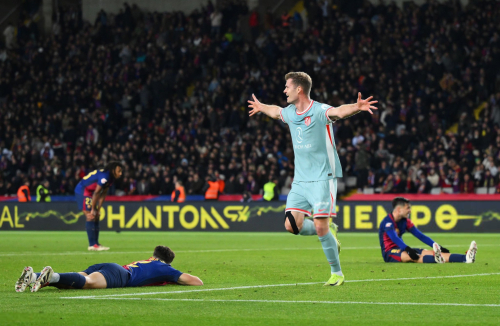
The goals were flying in at both ends as both Barcelona and Atlético Madrid squared up in the first leg of their Copa del Rey semi-final ties in the Olympic Lluis Companys Stadium on Tuesday evening.
In the pulsating 4-4 draw, Barcelona's defensive frailties were laid bare, raising concerns as they approach the UEFA Champions League (UCL) knockout stages.
Since Hansi Flick began his reign in the summer, Barcelona has employed an aggressive high-defensive line. This has seen them suffocate opponents by compressing the field and forcing turnovers in advanced positions.
However, while this tactic has yielded offensive benefits, it has, in the same vein, made them susceptible to swift counterattacks and sometimes exposed by long balls.
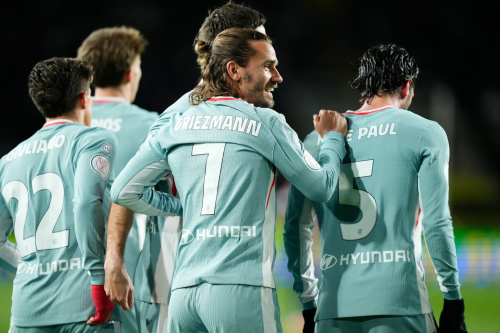
The match against Atlético epitomized this vulnerability. Early goals from Julián Álvarez and Antoine Griezmann capitalized on the space behind Barcelona's advanced defenders, exploiting lapses in coordination and positioning.
Despite a spirited comeback, defensive lapses allowed Atlético to equalize late in the game, underscoring the perils of an unchecked high line. Griezmann and Alexander Sorloth's goals, in particular, exposed the weakness of the high defense line.
Such has been the story for Barcelona this season, which has been so far so good as they currently sit top of the standings in La Liga and finished second in the UEFA Champions League group phase.
However, as they are set to continue their UEFA Champions League adventure, in the knockout rounds, where mistakes are heavily punished and little to no room is left for error, an amendment must be made to correct this weakness.
The High Line: Double-Edged Sword
Hasni Flick's high defensive line strategy is designed to maintain pressure and control, but it demands impeccable timing and cohesion among defenders.
On one occasion, the players are bound to be caught unawares and punished if the opposition takes their chances. It makes the defense vulnerable when up against pacey attackers because the defenders are already at a disadvantage trying to recover, having distanced themselves from their defensive areas.
Any misalignment can provide opponents with clear opportunities on goal. Earlier in the season, this approach was lauded, especially after a commanding 4-0 victory over Real Madrid, where Barcelona's defense caught their rivals offside 12 times.
However, subsequent matches revealed the system's fragility, with teams like Real Sociedad, Celta Vigo, and Leganés successfully breaching Barcelona's defense by exploiting the high line.
Despite their good status during the UEFA Champions League group phase, Barcelona conceded 13 goals, only Juventus conceded more amongst the teams that finished in the top 20, while 18 of the said clubs conceded fewer.
Six of the 13 have also come in their last two games in the competition, including four against Benfica in the penultimate fixture back in January, which suggests teams are starting to find them out defensively.
Although Barcelona has a reliable attack, with Raphinha, Lamine Yamal, and Robert Lewandowski delivering the numbers in the opposition end, defensive solidity will be crucial in the Champions League rounds about to kick off.
Learning from the Atlético Thriller
As Barcelona gears up for the Champions League knockout stage meeting with Benfica, addressing the exposed defensive vulnerabilities through tactical adjustment will be crucial.
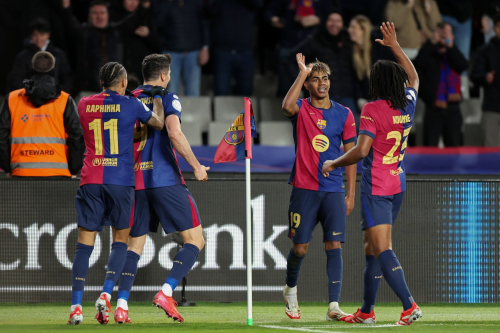
Barcelona, under Flick, has proven they could score much more than they would concede. Yet, it would be much safer for a club with their level of ambition to not concede so much, to avoid complications.
Hansi Flick has seen how his side can be vulnerable defensively, and even though they make up for that in attack, it may become too risky for them in a competition that involves elimination.
