
Andres Iniesta : Tribute to the heartbeat of golden generations
Andres Iniesta, the silent maestro from Fuentealbilla, a small village in the province of Albacete, Castile–La Mancha, who wowed football fans in the colors of Barcelona and Spain, has called time on an illustrious 22-year career.
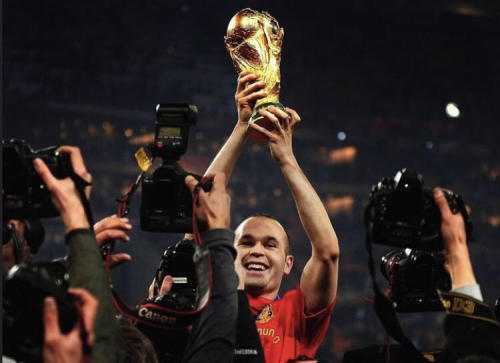
8-10-2024 is a date that will be famously remembered for the retirement of one of the greatest footballer of all time, who was not necessarily the showman but was the heartbeat of his teams, keeping them in a steady condition to achieve glory.
Andres Iniesta will always have a unique place in the pantheon of football greats. The way went about his game with his vision, impeccable control, and precise decision-making, which made him effortless beat opponents without employing pace, will arguably ever be unmatched.
The former Spanish international played the game like a grandmaster plays chess, always thinking two or three moves ahead. Whether he was dictating the tempo at Barcelona or pulling the strings for Spain, Iniesta’s contribution to the game often felt like watching art come to life.
As the football world say their farewell to one of the most intelligent players of his generation, we take a look at the impact of Andres Iniesta, in orchestrating the golden era of both Barcelona and the Spanish national team.
Andres Iniesta : The Making of a Silent Maestro
Andres Iniesta’s style of play gives away his personality. He is very calm and collected, sometimes shy but never when the ball was at his feet.
The midfielder started playing at a very young age, but played fustal due to the unavailability of a soccer pitch in his village. He trained with Albecete before moving to Barcelona to join the club's Academy of La Masia in 1996.
Iniesta made great strides with the youth team in Barcelona. In one of his highlights, he led the team to the Nike Premier Cup in 1999, as the team captain, he also scored the winning goal in the final minutes of the final.
Before his promotion to the first team, Iniesta was called to represent the Spanish youth teams and he also made a good mark there. He was part of both teams that won the UEFA European Under-16 and Under-19 Championships in 2001 and 2002 respectively.
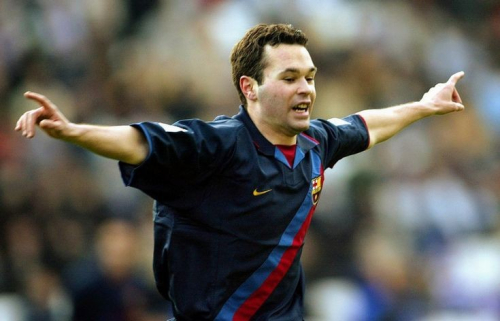
Promotion to The Barcelona Senior Team
The biggest dream of an Academy player is to make it to the senior team, it is also the biggest challenge and for a kid in Barcelona, at the time when the club boasted the likes of Ronaldinho, Pep Guardiola, Deco, and a few other superstars, it was never going to be easy. But talent wise, Iniesta had what it take.
In 2002, Inesta made his professional debut in October, during a 1-0 away win over Club Brugge in the UEFA Champions League group stage. He ended up with three appearances in the competition that season, adding six more in the league, but as a substitute.
He remained with the first team the following season, making 17 appearances across all competitions, under Frank Rijkaard.
However, fortune smiled on him at the start of the 2004-05 season as Xavi Hernandez picked up a long-term injury that ruled him out of the season, and Iniesta went on to appear in 37 of 38 La Liga games, more than any other player as Barcelona won the title, although he started just 12 times.
Having had a good time in the previou season, Iniesta became an integral part of the first team in 2005-06. He received high praises from his manager at the end of the season as Barcelona won the league and the UEFA Champions League titles.
He received his first call-up to the Spanish national team before the end of that season and in the summer, he was named in the squad for the Germany 2006 FIFA World Cup.
With qualification for the knockout stages already sealed after wins against Ukraine and Tunisia, Luis Aragones decided to play Iniesta for He full 90 minute in the final group game against Saudi Arabia. It was his only appearance as they crashed out following a 3-1 loss to France in the round of 16.
Some famous masterclass performances by Andres Iniesta
● Player of the match in 2010 FIFA World Cup final
● Player of the match in 2012 European Championship final
● Player of the match in 2015 UEFA Champions League final
● Player of the match in 2018 Copa del Rey final
Legendary Xavi-Iniesta-Busquets Midfield Trio
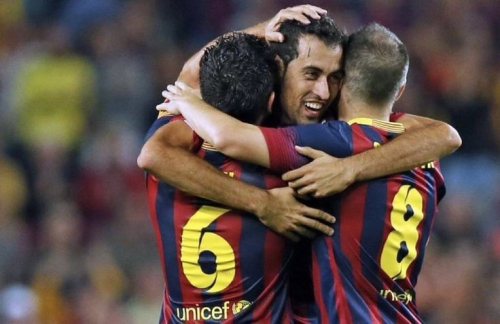
In 2008, Pep Guardiola succeeded Frank Rijkaard as the Barcelona coach and the Spaniard promoted Sergio Busquets into the senior team, favouring him over Ivorian legend Yaya Toure.
Alongside Iniesta and Xavi, they formed a great trio that complement one another in the Barcelona midfield. They played their first game together against Racing Santander in the Gameweek two of the La Liga in September.
Xavi and Busquets started the game while Iniesta replaced Aleksandr Hleb, who had to be taken off in the 39th minute due to injury.
Their first start together followed the weekend after as Barcelona cruised to a 6-1 win away to Sporting Gijon. Andres Iniesta assisted Xavi for the opening goal just before the half-hour mark, and he finished the game with one goal and two assists, just the same as Xavi.
It was never about the numbers for the trio but controlling the tempo of proceedings. With Busquets at the base, Xavi on the right and Iniesta on the left, the trio were unstoppable, gradually inching their way up the pitch when in possession and working together to pinch the ball back whenever it was lost.
It was a start to greatness and come the end of their first season together, they led Barcelona to the treble by winnning the La Liga, UEFA Champions League and the Copa del Rey titles. They later added the three other titles to complete a sextuple.
Between their first Barcelona match together in 2008 and final one in 2015, they played 182 matches in which they were all in the pitch together at the same time. It produced a winning percentage of 68 with 124 victories, 40 draws and 18 losses.
Trophies won by Barcelona during the Xavi-Iniesta-Busquets era
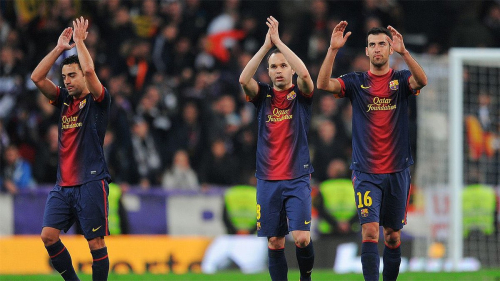
Andres Iniesta, Xavi Hernandez and Sergio Busquets were vital in defining Barcelona golden era. While Lionel Messi stole the headlines and deservedly claimed the individual awards, it is this trio that make things happen.
In their eight seasons together at the club before Xavi's departure in 2015, they rule European football, dominating domestic competitions in Spain as well as the UEFA trophies on the continent.
They won 19 titles, which included six league titles as they to win just twice in almost a decade. They also won three UEFA Champions League titles together, as Busquets was absent in 2006, when they beat Arsenal in the final.
● LaLiga: 2008/09, 2009/10, 2010/11, 2012/13, 2014/15
● Copa del Rey: 2008/09, 2011/12, 2014/15
● Spanish Super Cup: 2009, 2010, 2011, 2013
● Champions League: 2008/09, 2010/11, 2014/15
● UEFA Super Cup: 2009, 2011
● Club World Cup: 2009, 2011
Heartbeat of Spain's Golden Generation
Andres Iniesta became a regular part of the Spanish senior national team right after the end of the 2006 FIFA World Cup tournament in Germany.
Iniesta played in eleven of the twelve games of the European Championship qualifiers, starting seven times as Spain finished top of group F with 28 points out of the possible 36. Playing on the left of midfield, he contributed four goals and three assists for Luis Aragones' side.
During the tournament proper in the summer of 2008, Iniesta started all six games as Spain won the tournament, beating Germany in the final.
Inesta also assisted two of Spain's goals, including one to Xavi for the opener in a 3-0 win over Russia in the semi final.
Road to winning the FIFA World Cup in South Africa 2010
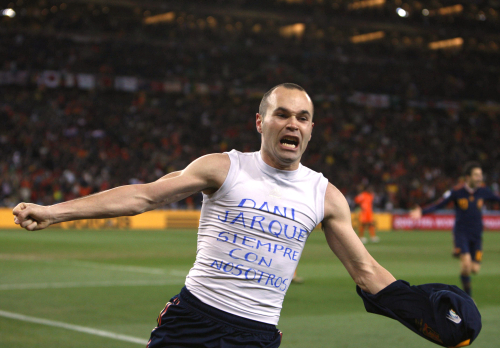
Two summers later, Spain extended their dominace to the global showpiece, the first of its kind on the soil of Africa and they went all the way to win the FIFA World Cup tournament in South Africa, and Iniesta was a standout performer for Vincente del Busquet's side.
The retired midfielder played 77 minute of the 1-0 loss to Switzerland in the opening game but was left on the bench as Spain beat Argentina 2-0 in their second match of the tournament. He would go on to play every minute of their remaining five games en route to winning it.
Iniesta also scored two of Spain's most important goals. The first, an eventual winner to help them beat Chile in their final group game and seal qualification for the knockout phase, and the other the lone goal to beat The Netherlands in the final.
Spain won their first-ever FIFA World Cup title with a team dominated by Barcelona players in the exception of goalkeeper Iker Casillas, defender Sergio Ramos and midfielder Xabi Alonso who all played for Real Madrid at the time.
Left-back Joan Capdevilla was also a Villarreal player and Fernando Torres played for English Premier League side Liverpool. David Villa was the other player who played for Valencia, but had already played his final game for Los Ches as he moved to Barcelona that summer.
Again, Andres Iniesta, who had a sensational outing was named the player of the tournament. Spain's golden generation achieved the unimaginable, and Inesta was at the heart of it all.
Two years later in Poland-Ukraine, Spain completed a hat-trick by becoming the first ever nation to win three consecutive major international titles by winning defending their UEFA European Championship title.
Iniesta’s career with the national team would go on until the end of their run in the 2018 FIFA World Cup in Russia, where Spain was eliminated in the round of 16 in the hands of the host, following a 4-3 shootout loss, after a 1-1 draw at the end of 120 minutes.
Numbers For Spanish National Team
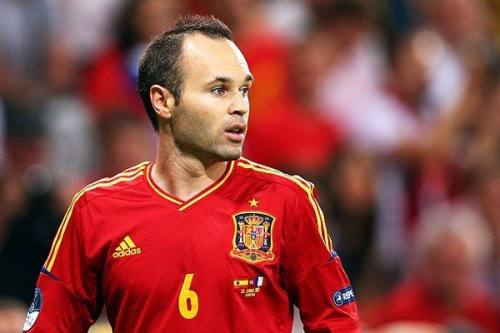
Andres Iniesta won 131 caps for the national team, placing him fifth in the all-time list for most appearances for Spain. He is only two behind Xavi Hernandez.
His 30 assists for the country also places him in the top three, with six ahead of Xavi Hernandez. Only Cesc Fabregas, 36 and David Silva, 32 have more. He also managed 14 goals, of which 22 players have more in the country's history.
Iniesta’s career is not defined by numbers but the influence he has on the game. In an era where number speaks for players, if you're never there to see his greatness, tales will do no justice to the brilliance of such a genius.
Defined an era with Barcelona
Andres Iniesta’s career with Barcelona lasted for 16 years before his departure for Japanese side Kobe Vissel in the summer of 2018, three years after the club bid farewell to his long-term partner in the midfield Xavi Hernandez.
Together, alongside Sergio Busquets in midfield, and Lionel Messi in attack, they defined a successful era at Barcelona, one the club may never be able to replicate until the end of time.
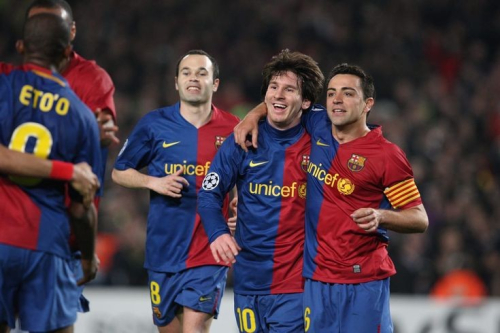
The ordinary boy from small village in the province of Albacete, who arrrived in La Masia with eyes full of tears of sadness for leaving his parents, made millions of Barcelona fans very emotional at the announcement of his decision to leave the club.
He left when the ovation was high, April 2018, during the final weeks of the season, Iniesta delivered a masterclass to help Barcelona beat Sevilla 5-0 in the Copa del Rey final, picking up the player of the match at full time. Barcelona also won the league at the end of the season.
In 674 games for the Catalan giants, he scored 57 goals, 135 assist, and unlimited brilliance. Another impressive fact about the 40-year-old is that not even once was he sent off in entire career.
Post-Barcelona: Final Years as a Professional
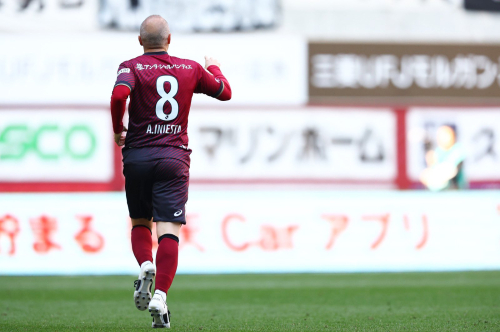
In the summer of 2018, Andres Iniesta signed a three year contract with Vissel Kobe in Japan. He eventually spend five seasons at the club before moving to United Arab Emirates last year, where he signed for Emirates Club, where he played his final season as a professional.
Numbers for Other Clubs
In 137 games for Vissel Kobe, Iniesta scored 26 goals and assisted 25. He won three titles in those five years, which were the club's first-ever with the league in 2023, Super Cup in 2020 and the Emperor's Cup in 2019.
He scored five times and assist one goal in 23 games for Emirates Club.
Individual Awards and Recognition
● UEFA Euro Team of the Tournament: 2008, 2012
● La Liga Best Spanish Player: 2009
● La Liga Best Midfielder: 2009, 2011, 2012, 2013, 2014
● FIFA FIFPro World11: 2009, 2010, 2011, 2012, 2013, 2014, 2015, 2016, 2017
● UEFA Team of the Year: 2009, 2010, 2011, 2012, 2015, 2016
● Onze de Bronze: 2009
● FIFA World Cup Dream Team: 2010
● ESM Team of the Year: 2010–11, 2017–18
● Onze d'Argent: 2011
● Marca Legend Award: 2011
● UEFA Best Player in Europe Award: 2012
● UEFA Euro Player of the Tournament: 2012
● IFFHS World's Best Playmaker: 2012, 2013
● IFFHS World Team of the Decade 2011–2020
● IFFHS UEFA Team of the decade 2011–2020
● FIFA Confederations Cup Silver Ball: 2013
● La Liga top assist provider: 2012–13
● Golden Foot: 2014
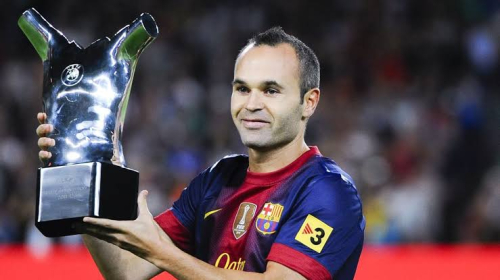
● UEFA Champions League Squad of the Season: 2014–15, 2015–16
● UEFA Ultimate Team of the Year (published 2015)
● FIFA Club World Cup Bronze Ball: 2015
● France Football World XI: 2015
● La Liga Team of the Season: 2015–16
● UEFA Euro All-time XI (published 2016)
● J.League Best XI: 2019, 2021
● Ballon d'Or Dream Team (Bronze): 2020
Decorations
● Prince of Asturias Awards: 2010
● Gold Medal of the Royal Order of Sporting Merit: 2011
● Queen Sofia Award: 2017
● Grand Cross of the Royal Order of Sports Merit: 2018
Legacy
As Iniesta steps away from professional football, his legacy is secure as one of the greatest midfielders of all time, a player who combined skill and vision with grace and respect, making the game more beautiful for everyone who watched him.
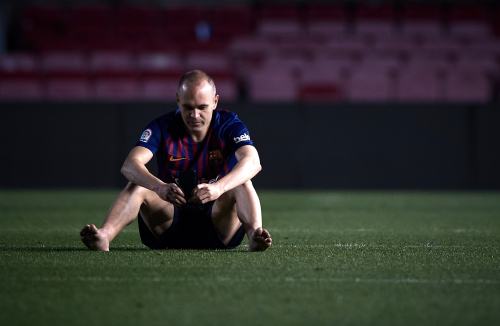
It also extends beyond in-field accomplishments and his career will be an inspiration to future generations, with his humility and passion. His influence on Spanish football and Barcelona history is already there to be seen in players like Pedri, Gavi and others.
Andres Iniesta will forever be remembered as one of the greatest players to ever grace the round leather game. Happy retirement, El Illusionista.
