
Why Norway’s World Cup 2026 Qualification Run Isn’t Just About Erling Haaland
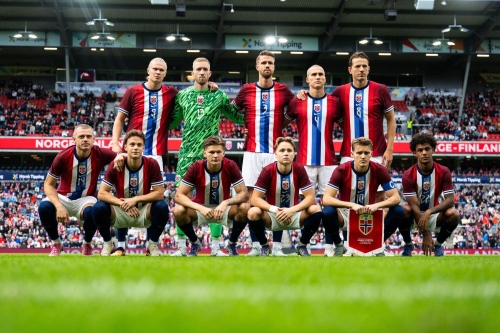
Norway are closing in on qualification for a major tournament for the first time since their appearance at the FIFA World Cup in 2000, following a standout qualifying campaign for the 2026 global showpiece.
Their success has apparently been limited to Erling Haaland's goals in the media, but for a nation that has failed even when Manchester City strikers have been scoring goals in previous qualifiers, this achievement is far from just a one-man show.
Norway's success is more than just Erling Haaland's goals
It was around two years ago, when the same nation failed to qualify for the European Championship in the same group where Scotland progressed, even though they had Haaland, who produced six goals in five games.
They finished in third place with 11 points, six behind second-place Scotland, who sealed the ticket to Germany alongside group winners Spain.
Two years on, they have remained perfect after six FIFA World Cup qualifying games, and are a win away from securing their place in the global showpiece since their last appearance just before the turn of the century.
What has changed for Norway
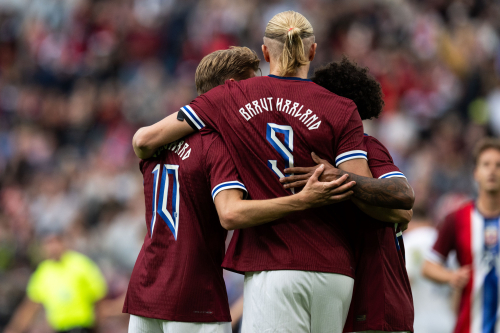
It's been coming, and of course, Erling Haaland has had a huge impact on their success story. But this is more than just the doings of one man, it is much more.
Previously, they relied on individual brilliance of the Manchester City striker and Martin Ødegaard to scale them through the hurdles, but after failing sensationally, they reversed to building a team that can compete, and that has also lifted the performances of their superstars, especially Haaland who is heavily dependent on his environment.
Stale Solbakken has been blessed with a wealth of talented young players, and Norway could be among the nations with the most talent today, when the heavyweights are taken out of the picture.
In Erling Haaland, who has been responsible for 48 percent of their goals in the World Cup qualifiers, they boast one of the greatest strikers of this generation, who, if he continues in his form, would be up there with one of the best ever.
His impact has been overwhelming. Erling Haaland has scored in each of their six games, amassing 12 goals, which is at least five more than any other player, and two assists despite missing their most recent game.
He recently became the fastest player to reach 50 international goals with a hat-trick against Israel, taking just 47 games to reach 51 goals, which is three fewer than needed by Romelu Lukaku, who previously held the record.
But he isn't the only one having such a massive impact on the team; rather, he is benefiting from a set-up that is built for him to thrive, while Norway has strikers like Alexander Sorloth and Strand Larsen, who would also thrive given the opportunity in the current team.
Norway has come a long way since their European Championship qualifiers heartbreak, and they've shown much hunger to top Italy in a group where the Azzurri were tipped to dominate.
Stale Solbakken will be delighted with how his team has responded to their Euro absence, and aside from Erling Haaland, a lot of individuals have also stood out, but overall, they've been sensational collectively.
Other stars in Norway's success run
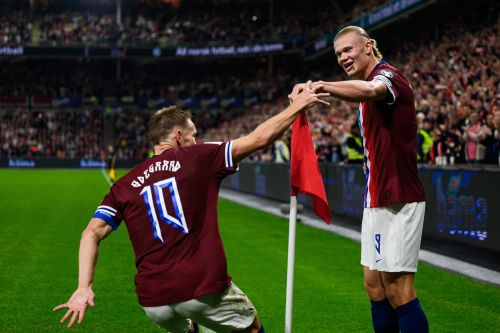
Martin Ødegaard has also been fantastic. The captain played a direct role in nine goals, leading the way for assists and chances created in the qualifying campaign with eight and 25, respectively.
Ødegaard has also created the second most big chances and is third on goal involvements with nine, behind only Memphis Depay, and teammate, Erling Haaland. He is the best player of the qualifiers [FotMob and SofaScore].
Attackers like Antonio Nusa and Alexander Sorloth have also justified their minutes with consistency, while Sander Berge and Patrick Berg have also been solid behind the attackers, ensuring they get the needed services through their dominant displays.
In six FIFA World Cup qualifying games so far, Norway has kept four clean sheets and conceded just three goals, a highlight of just how much they have improved defensively.
David Moller Wolfe, Julian Ryverson, Kristoffer Ajer, Leo Ostigard, and goalkeeper Orjan Nyland have made the defensive line more solid, while a balanced team performance has seen them emerge as one of the best possession-based nations with an average of more than 58 percent.
They are one of the most disciplined teams. Just six yellow cards from six games and an average of nine fouls per game.
Norway have achieved a complete makeover in the last 24 months, and this isn't only down to Erling Haaland but the entire team. If having a good striker is all it takes qualify, then Sweden would own a ticket by now. Instead, they're on the brink of elimination.
They've defended compactly, they've been dominant and very creative. Noway has created 39 big chances so far, the most of any country in the UEFA 2025 FIFA World Cup qualifiers.
So, when this nation eventually achieved the inevitable and qualifies for the FIFA World Cup, they would be one of the teams to watchout for, but think all there is to them is Erling Haaland at your own peril.
Norway in Major Tournaments
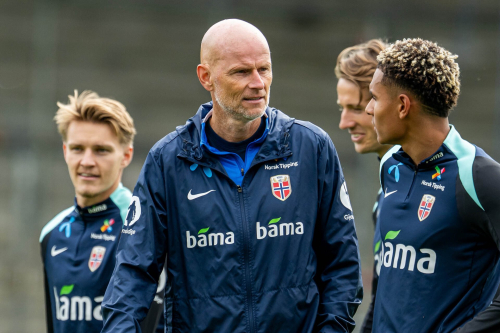
Norway's last appearance at a major tournament was in the 2000 European Championship, where they suffered group exit after finishing third in Group C, level on points and goals with second place Yugoslavia, but scored inferior goals.
Their current manager Stale Solbakken was part of the team that scored once in three games, which was in a win over group winner, Spain, in their opening game of the tournament.
Two years earlier, Norway had achieved back-to-back FIFA World Cup tournament appearances for the first time in their history, having not appeared since their debut in 1938.
After suffering group exit in 1994, they reached the second round in France '98, benefiting from a 2-1 win over Brazil in their final group game, when the eventual runner-up had already secured their status as group winners.
Norway was ultimately beaten by Italy in the round of 16 courtesy of Christian Vieri's first-half goal, and they failed to achieve a new personal record, having already reached the stage 60 years earlier in 1938.

