
Every FIFA President Since 1961 and the Major Controversies That Defined Their Reigns
For an organisation entrusted with governing the world's most popular sport, FIFA has rarely enjoyed prolonged periods free from controversy since 1961.
While every administration has introduced reforms, expanded competitions or grown football's global reach, each has also faced defining moments that sparked fierce debate over governance, ethics and the balance between politics and football.
Since 1961, only four men have occupied FIFA's highest office, with their presidencies spanning more than six decades, during which football evolved from a largely European-centred sport into a multi-billion-dollar global industry.
Television, sponsorship, commercial partnerships and World Cup expansion transformed FIFA into one of the most influential sporting organisations in the world. Yet with greater influence came greater scrutiny.
Questions surrounding political interference, corruption, commercialisation, transparency and governance have repeatedly overshadowed football itself. In many cases, the controversies surrounding FIFA presidents became as memorable as the tournaments staged under their leadership.
From Sir Stanley Rous to Gianni Infantino, every FIFA president since 1961 has presided over defining moments that shaped both the organisation's image and the direction of world football.
In the wake of the recent controversy involving the current FIFA president Gianni Infantino, amid his now scrapped Forward Enterprise proposal, we take a look at every controversy involving the organization presidents since 1961.
FIFA President Since 1961 and the Major Controversies
Sir Stanley Rous: 1961–1974
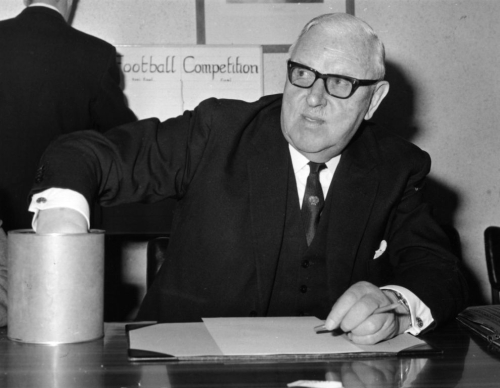
Sir Stanley Rous is famously remembered for helping modernise football administration and overseeing an era in which the FIFA World Cup became a truly global television event, highlighted by the 1970 tournament in Mexico, the first World Cup broadcast worldwide in colour.
However, his presidency remains deeply controversial for his handling of apartheid-era South Africa as he repeatedly attempted to reintegrate the country's segregated football system into FIFA, drawing strong opposition from newly independent African nations and anti-apartheid campaigners.
The Englishman's position damaged the organization's relationship with Africa and became a decisive factor in his eventual electoral defeat in 1974.
Rous's administration also faced the 1966 African boycott, when African nations withdrew from World Cup qualifying after FIFA refused to guarantee the continent a direct place at the finals.
Another defining controversy occurred in 1973, when the Soviet Union refused to play Chile in Santiago following General Augusto Pinochet's military coup.
Rous's administration insisted that the match proceed, and Chile advanced to the tournament without opposition after walking onto an empty pitch, an incident that went down as one of football's most politically charged moments.
João Havelange: 1974–1998
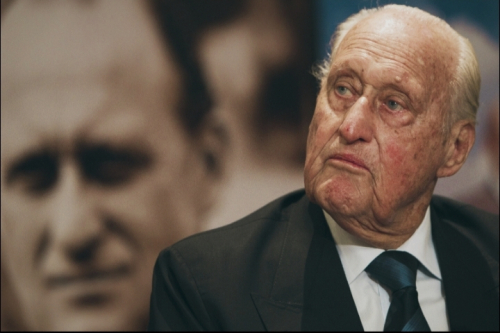
João Havelange transformed FIFA into a commercial powerhouse. Under his leadership, the World Cup expanded, new youth and women's competitions were introduced, and television and sponsorship revenues increased dramatically.
The Brazilian also strengthened football's presence across Africa, Asia, Oceania and CONCACAF, fundamentally reshaping FIFA's influence around the world.
His achievements, however, were overshadowed by the ISL bribery and kickback scandal. Court proceedings later revealed that Havelange received millions of dollars in illicit payments linked to FIFA's former marketing partner, International Sport and Leisure.
The revelations eventually forced him to resign after 24 years in office as FIFA honorary president and leave the International Olympic Committee entirely.
Havelange's final years also attracted criticism over alleged vote-buying during the 1998 FIFA presidential election, which brought Sepp Blatter to power.
Critics further accused him of turning FIFA into an increasingly commercial and politically driven institution, where sponsorship deals and electoral alliances became central to decision-making.
Sepp Blatter: 1998–2015
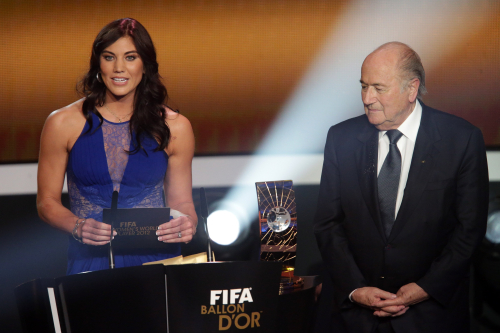
Sepp Blatter presided over one of FIFA's most turbulent eras. His presidency is generally regarded as the most corruption-plagued era in FIFA's history.
Under his watch, FIFA expanded development programmes, launched new competitions and increased investment in football worldwide. Yet his presidency became synonymous with governance scandals that severely damaged FIFA's credibility.
His administration was engulfed by widespread allegations of corruption, bribery and financial misconduct, culminating in the 2015 investigations by United States and Swiss authorities into FIFA officials.
Separate scrutiny of the bidding processes for the 2018 and 2022 FIFA World Cups intensified criticism of FIFA's governance and transparency.
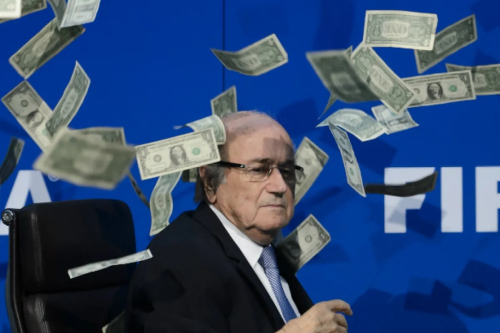
The crisis reached a symbolic low point in July 2015 when British comedian and activist Lee Nelson (Simon Brodkin) interrupted a FIFA press conference by walking onto the stage and throwing fake U.S. dollar bills at Blatter, shouting that they were for North Korea 2026.
The incident, which took place amid mounting corruption investigations, became an enduring image of the reputational damage FIFA suffered during the final months of Blatter's presidency.
Blatter resigned in 2015 following the crisis and was subsequently banned from football administration until June 2028 after ethics proceedings.
His presidency remains one of the most controversial in sporting history, not just football, symbolising the period when FIFA's internal governance came under unprecedented global investigation.
Gianni Infantino: 2016–Present
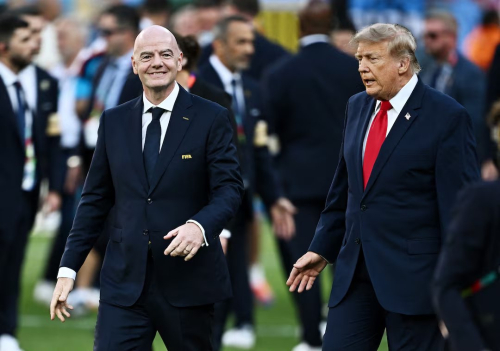
Gianni Infantino assumed office promising transparency and reform after the Blatter era. His presidency has overseen the expansion of the FIFA World Cup to 48 teams, increased financial support for member associations and the continued commercial growth of FIFA competitions.
Nevertheless, controversy has continued to follow the organisation. Infantino has faced sustained criticism over FIFA's relationships with the hosts of the 2018 and 2022 World Cups, as well as Saudi Arabia's growing influence in football.
His unusual relationships with head of states instead of football administration, use of private jets and FIFA's adoption of dynamic ticket pricing have also attracted public criticism.
The latest governance crisis emerged after FIFA abandoned its proposed FIFA Forward Enterprise (FFE) project, which sought private investment in World Cup commercial rights. The proposal triggered widespread opposition from UEFA and several football stakeholders before being withdrawn.
Reports now suggest sections of UEFA are prepared to pursue a vote of no confidence should Infantino refuse to step aside, creating one of the most significant political challenges of his presidency.
Conclusion
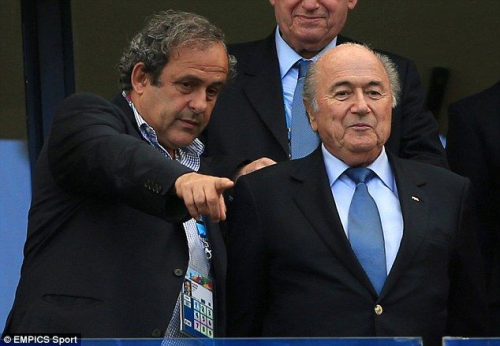
The history of FIFA since 1961 illustrates a recurring pattern, that every president has overseen meaningful progress for world football while simultaneously confronting controversies that reshaped public perceptions of the organisation.
Whether driven by politics, commercial ambition or governance failures, these episodes have ensured that FIFA's highest office remains one of the most scrutinised positions in the world of sport.
