
The Balogun Saga: Is Al Kamali taking the fall for FIFA?
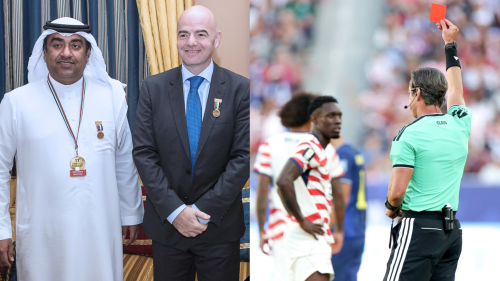
There are World Cup controversies that fade with the final whistle, and then there are the ones that peel back the wallpaper on an entire institution, and the ongoing tournament is having a toll on FIFA's credibility.
The Folarin Balogun incident belongs firmly in the latter category, because what began as a contentious red card in a routine Round of 32 tie has metastasised into perhaps the most damaging governance scandal FIFA has faced.
Of all the several controversies at the World Cup, it is the one that touches the White House, exposes a secretive committee, and raises uncomfortable questions about who truly runs football's most powerful institution.
The Decision That Shook the Tournament
It started simply enough. Balogun, the United States' striker and leading scorer at this World Cup, was shown a straight red card for what officials adjudged to be a reckless challenge on Bosnia and Herzegovina's Tarik Muharemović during America's 2-0 win in the Round of 32.
Under FIFA's own rules, that red card should have triggered an automatic one-match ban, ruling him out of the Round of 16 date with Belgium, was confirmed following at full-time.
Surprisingly, on the eve of that fixture, FIFA's Disciplinary Committee announced it was suspending the enforcement of the ban for a probationary period of one year, alongside a $40,000 fine.
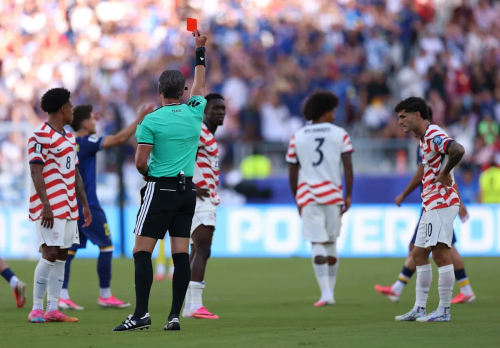
Balogun was suddenly free to play, and he did, though the Americans still crashed out 4-1 to the Belgians. On paper, it looked like a technical footnote, but in reality, it detonated a firestorm that has not stopped burning since.
Trump's Phone Call and the Politics of Football
The plot thickened considerably when it emerged that United States' President Donald Trump had called FIFA president Gianni Infantino before the reversal, asking him to review the case.
Trump wasted no time celebrating once the ban was lifted, publicly thanking FIFA for what he called correcting an injustice, a message that landed like a grenade in football circles already uneasy about American political influence creeping into the World Cup being co-hosted on US soil.
Infantino, for his part, insisted the timeline was innocent. He acknowledged speaking with Trump but maintained he had simply explained that an ongoing legal process was underway within FIFA's independent judicial bodies, and that the committee's autonomy remained untouched by any conversation with the White House.
Critics were not convinced. Former FIFA president Sepp Blatter himself waded in to question the reversal, lending an ironic touch given his own chequered history during his time as leader of the football's governing body.
The optics were damning enough: a sitting American president publicly lobbying a world football body, followed within hours by a ruling that benefited the co-host nation's biggest star ahead of a crucial knockout match.
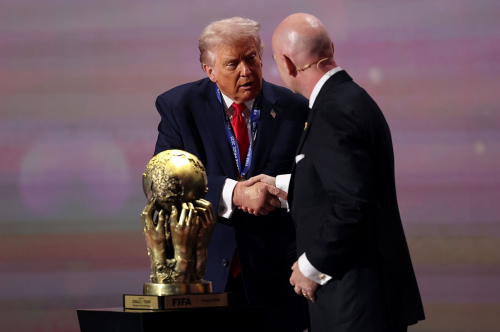
Whether or not causation can be proven, the appearance of political interference has stuck to Infantino like tar, and for many observers, that appearance is now doing as much damage as any smoking gun would.
Article 27: A Rule Stretched Beyond
FIFA anchored its decision on Article 27 of its Disciplinary Code, a provision allowing judicial bodies to suspend, in full or in part, the implementation of a disciplinary sanction, subjecting the sanctioned party instead to a probationary period of between one and four years.
It is a real rule, and it has occasionally been used before tournaments, most notably to defer suspensions hanging over players like Cristiano Ronaldo before the World Cup began.
But applying it mid-tournament, to override an automatic red-card suspension already in motion, is an entirely different proposition, and this is precisely where Belgium's football federation launched its most pointed objection.
The Belgians noted that Article 66.4 of that same Disciplinary Code states plainly that a red card automatically results in suspension for the team's next match, a rule that had governed every other dismissal at this World Cup without exception.
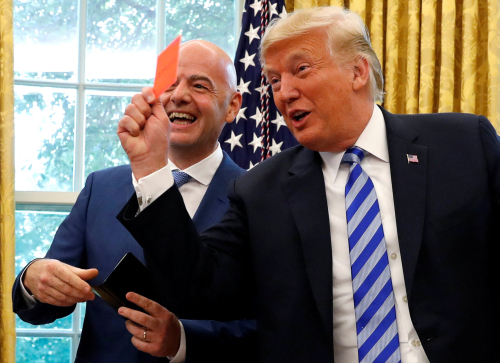
Worse still for FIFA, the tournament's own Competition Regulations, specifically Article 10.5, mirror that same automatic consequence for a sending-off. In other words, FIFA reached for a general disciplinary mechanism to override a specific, unambiguous, competition-specific rule, one that had applied uniformly to every other red card shown in this tournament.
One Man, One Signature, One Almighty Mess
Perhaps the most explosive revelation, however, came days later, when investigative reporting revealed that the entire decision had been made by a single individual: disciplinary committee chairman Mohammad Al Kamali, an Emirati lawyer, acting without consulting any of the seventeen other members sitting alongside him on the panel.
No vote. No deliberation among peers. Just one man's signature deciding the fate of a World Cup knockout fixture. And yes, FIFA's own governance structure does technically permit this.
The chairperson of the disciplinary committee is allowed to issue decisions alone or delegate that authority to another committee member, and reporting has shown that the committee's most recent published rulings were each handled by a solitary adjudicator rather than a full panel.
However, according to the Times' investigation, more significant or high-profile disciplinary matters have typically been handled by a group of three members, and even the practice of single-handed rulings had, until now, usually fallen to deputy chairman Jorge Palacio rather than Al Kamali himself.
Never before this Balogun episode had Al Kamali personally acted as the sole arbiter on a case of this magnitude, and never had a red-card suspension at a World Cup finals been unwound by one man without any documented consultation among a body of eighteen.
FIFA has offered no explanation for why this case, of all cases, warranted departing from that informal but consistent convention. That silence, more than the decision itself, is what has critics alarmed.
Belgium's Complaint and the Wall of Silence
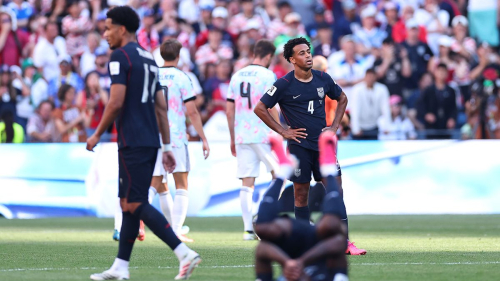
Belgium did not take the reversal lying down. The Royal Belgian Football Association released a statement expressing its astonishment and formally challenged the ruling, arguing it directly contradicted FIFA's own competition regulations.
UEFA piled in too, describing the decision as unprecedented, incomprehensible and unjustifiable. Yet despite an official appeal from a federation that went on to eliminate the Americans anyway, FIFA denied Belgium's challenge and let the ruling stand.
That refusal to budge, even in the face of a formal protest from an aggrieved federation, is what makes the supposed one-man decision claim so uncomfortable for FIFA.
If a single chairman really did act alone, without consulting his committee, one would expect an appeal process to at least trigger a fresh review by the panel he supposedly bypassed.
Instead, FIFA's response was to defend the outcome without ever publishing the actual reasoning behind it, and without identifying, beyond Al Kamali's public defence of the ruling, exactly who deliberated on what evidence.
For an organisation that loves to invoke the language of judicial independence, the refusal to show its working looks less like discretion and more like damage control.
Is Al Kamali Taking the Fall for FIFA?
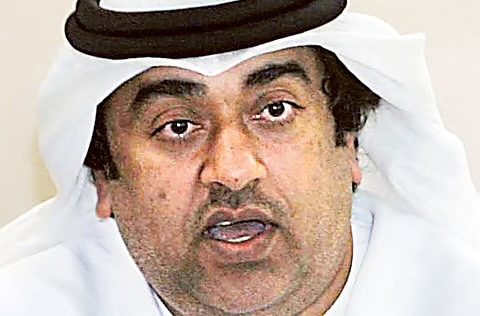
This is where the saga curdles from procedural scandal into something closer to theatre. Al Kamali is now the public face of a decision that conveniently shields Infantino from direct scrutiny.
The FIFA president can point to an independent judicial body and wash his hands of the affair, exactly as he has done in his public statements.
Former FIFA governance chief Miguel Maduro, who was pushed out of his own role at the organisation not long after taking it, put his finger on the uncomfortable truth when he suggested that FIFA hides behind the supposed independence of its disciplinary committee.
It is a searing accusation from a man who once sat inside FIFA's reform machinery and watched it fail from within.
The real question is; did one Emirati lawyer really wake up and unilaterally decide to bend a World Cup rule for the co-host, at the exact moment its president was fielding calls from the Oval Office? Or is Al Kamali the designated lightning rod, absorbing the fury that would otherwise land squarely on Infantino's desk?
Until FIFA publishes the full reasoning behind this decision and explains why established convention was abandoned for this one case, that question will linger over the remainder of this World Cup like smoke that refuses to clear.
What the Balogun saga has truly exposed is not just one contentious red card, but the fragile machinery that rules football, a machinery that appears to bend, quietly and conveniently, whenever enough pressure is applied from the right address.
